
24-Hour Liquidation of $1 Billion, Is Bitcoin Going to Drop to $70,000?


After a series of hacking incidents and a drastic drop in market sentiment, this morning Bitcoin suddenly flash-crashed, briefly falling below $91,000. In the past 24 hours, there has been a total of $952 million in liquidations across the entire network, with $884 million in long liquidations and $68.5552 million in short liquidations. Furthermore, in the last 24 hours, a total of 316,443 people globally have been liquidated, with the largest single liquidation occurring on Bitmex - XBTUSD worth $10 million.
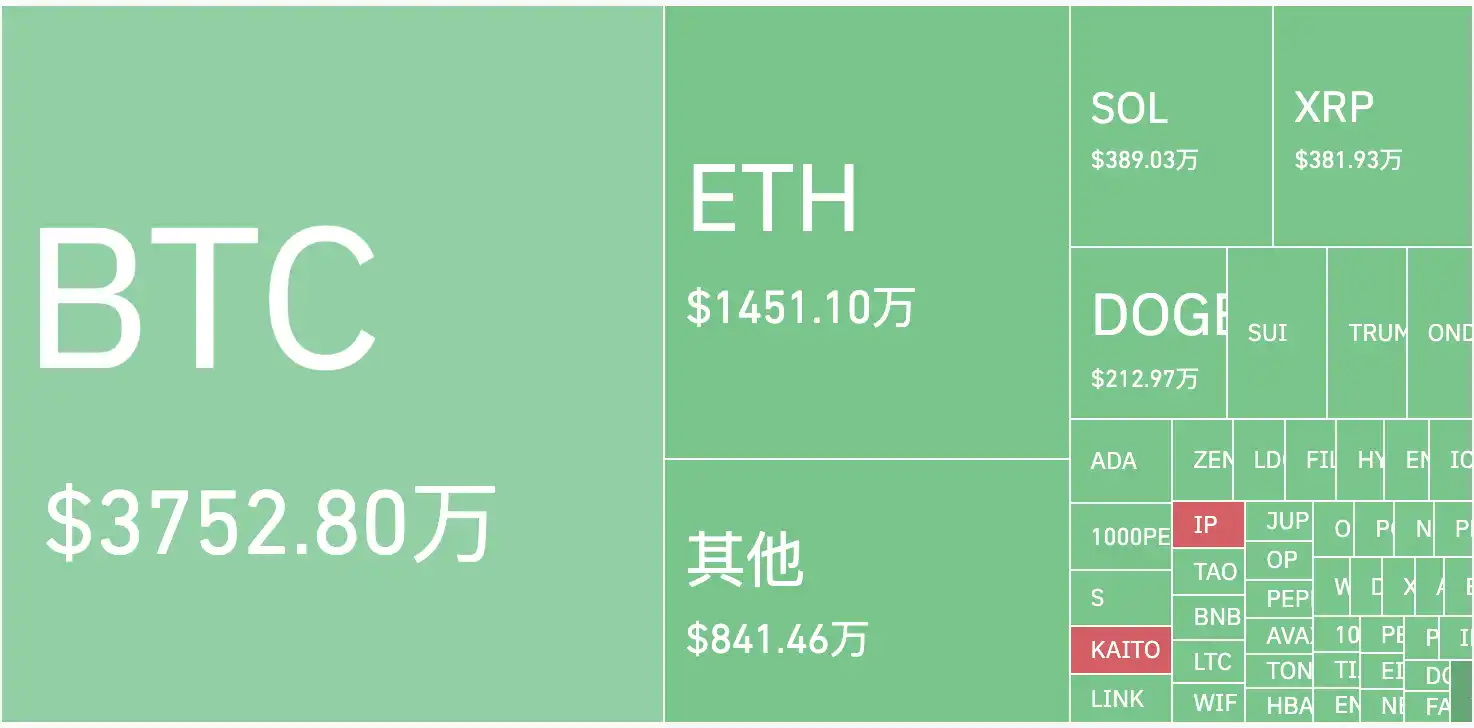
According to Alternative data, today's cryptocurrency fear and greed index has dropped to 25 (from 49 yesterday), shifting market sentiment from neutral to extreme fear. In recent market action, Bitcoin has experienced multiple sharp short-term drops. Below are the market reasons for Bitcoin's decline as compiled by BlockBeats, provided for readers' reference.
IBIT Massive Liquidation
BitMEX co-founder Arthur Hayes tweeted this morning, suggesting that BTC's flash crash was related to IBIT, a hedge fund. Many $IBIT holders are hedge funds that are long ETFs and short CME futures to earn higher returns than short-term U.S. Treasury bonds.
If the basis narrows as $BTC drops, these funds will sell $IBIT and buy back CME futures. These funds are profitable, and given that the basis is close to the U.S. Treasury bond yield, they will liquidate during U.S. trading hours to realize profits, possibly causing Bitcoin to fall back to $70,000.
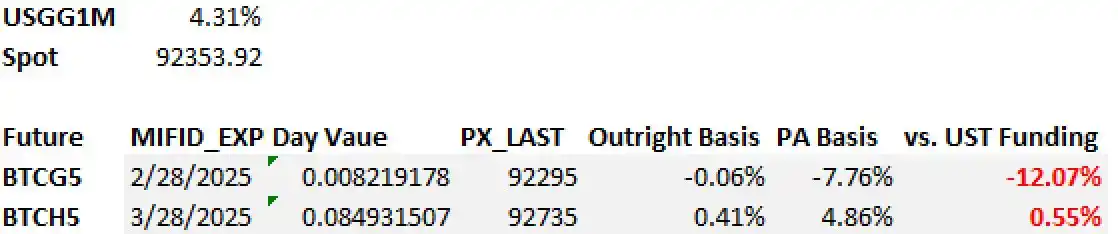
Previously, Arthur Hayes had published a blog post anticipating that because there was no fundamental change in U.S. politics due to Trump's reelection, the price of cryptocurrency might fall back to levels seen in the fourth quarter of 2024.
Therefore, Arthur Hayes still believes that Bitcoin will retest $70,000 to $75,000. Only if the Federal Reserve, the U.S. Treasury Department, Japan, or others engage in some form of money printing, or enact specific legislation allowing for permissionless cryptocurrency innovation, can the current market situation improve.
The Bitcoin strategic reserve policy is very poor. "The fundamental problem of governments hoarding any asset is that their buying and selling of assets is mainly for political gain, not financial gain." This policy may change with changes in the political landscape, thus altering Bitcoin's original trajectory.
Related Reading: "Arthur Hayes' New Article: Beyond Bitcoin National Reserves, the U.S. Cryptocurrency Hegemony Has Other Plans"
Delayed Realization of Bitcoin Strategic Reserve Expectations
Trump's plan for a Bitcoin strategic reserve has been slow to materialize, and market confidence continues to erode. In a recent tweet, Arthur Hayes mentioned that the fundamental problem with governments hoarding any asset is that their buying and selling of assets is mainly for political gain, not financial gain. Those building truly decentralized technologies and applications do not have enough financial resources to play politics at this critical juncture. Therefore, the desire for cryptocurrency regulation may come true. If it does, it will appear in an overly complex and prescriptive form, affordable only by large, wealthy centralized companies.
Indeed, on February 21, the probability on Polymarket of "Trump establishing a strategic Bitcoin reserve within 100 days of taking office" dropped to 10%, while on January 20, the day Trump was sworn in as president, the probability had risen to 48% at one point.
The expectations for a BTC strategic reserve have not been fully met. At the national level, Trump has not introduced a bill for a BTC strategic reserve, and he has even been absent from the cryptocurrency market for some time. At the state level, many proposals have been put forward but then rejected.
On February 24, the Montana House of Representatives voted against a proposed bill on February 22 that would have designated Bitcoin as a state reserve asset. The bill proposed to establish a special revenue account to invest in precious metals, stablecoins, and digital assets with a market cap exceeding $750 billion, of which only Bitcoin currently meets this criterion. The bill was opposed by several Republican lawmakers who believed it would lead the state investment board to engage in excessive speculation with taxpayer funds, posing a high risk. Supporters argued that if the bill was not passed, the state government would miss out on the opportunity to enhance returns. The bill is now essentially shelved, and if it is to be reintroduced in the future, it will need to be resubmitted for legislative review.
On February 25, according to Cointelegraph, at a legislative meeting on February 24, the South Dakota House of Representatives Business and Energy Committee decided to postpone consideration of the HB 1202 bill to the "41st day" of the current legislative session. However, the state legislature only has a maximum of 40 days, so this action is equivalent to rejecting the bill, meaning that the state will not include Bitcoin as an official investment option for the time being.

Related Reading:《Arthur Hayes New Article: Beyond Bitcoin Reserve Currency, America's Cryptographic Supremacy Has Another Agenda》
Is the Bull Market Still Here?
On the other hand,
The poor performance of cryptocurrency stocks in the US stock market has also led to risk liquidity being restricted as liquidity has been diverted across various assets including gold, US treasuries, and US stocks, limiting liquidity injection into the Crypto market, where:
Coinbase (COIN) fell 2.7%; Tesla (TSLA) fell 2.66%; Trump Media & Technology Group (DJT) fell 5.59%; MicroStrategy (MSTR) fell 4.73%; MARA Holdings (MARA) fell 5.12%; Riot Platforms (RIOT) fell 4.67%; Hut 8 Corp. (HUT) fell 8.48%
A significant part of the reason may lie in the tariff issue. Although delayed, the Trump administration has stated that it will impose tariffs on Mexico and Canada on time, further strengthening the US dollar's position, thereby bolstering the US dollar index. This has led to the risk of a decrease in sales of the technology seven dragons with high weight in the Nasdaq Index due to tariff expectations, and the risk of liquidity fleeing bursting the AI bubble.
Traders in the market have also presented data from the previous cycle and the cycle before last, indicating that this cycle has not changed its inherent form due to Trump's election. Multiple traders believe that we are currently in the middle of a bull market correction phase, but overall, it is bearish in the short term.
In the 2021 market, Bitcoin ($BTC) fell 56%, Ethereum ($ETH) fell 61%, Solana ($SOL) fell 67%, and many other tokens fell by more than 70-80%. Although there are various reasons that can be used to explain why this cycle is different from the past, the mid-term of the bull market we are currently experiencing actually has historical precedents. Those who believe that the market has entered a full bear market are actually misled.
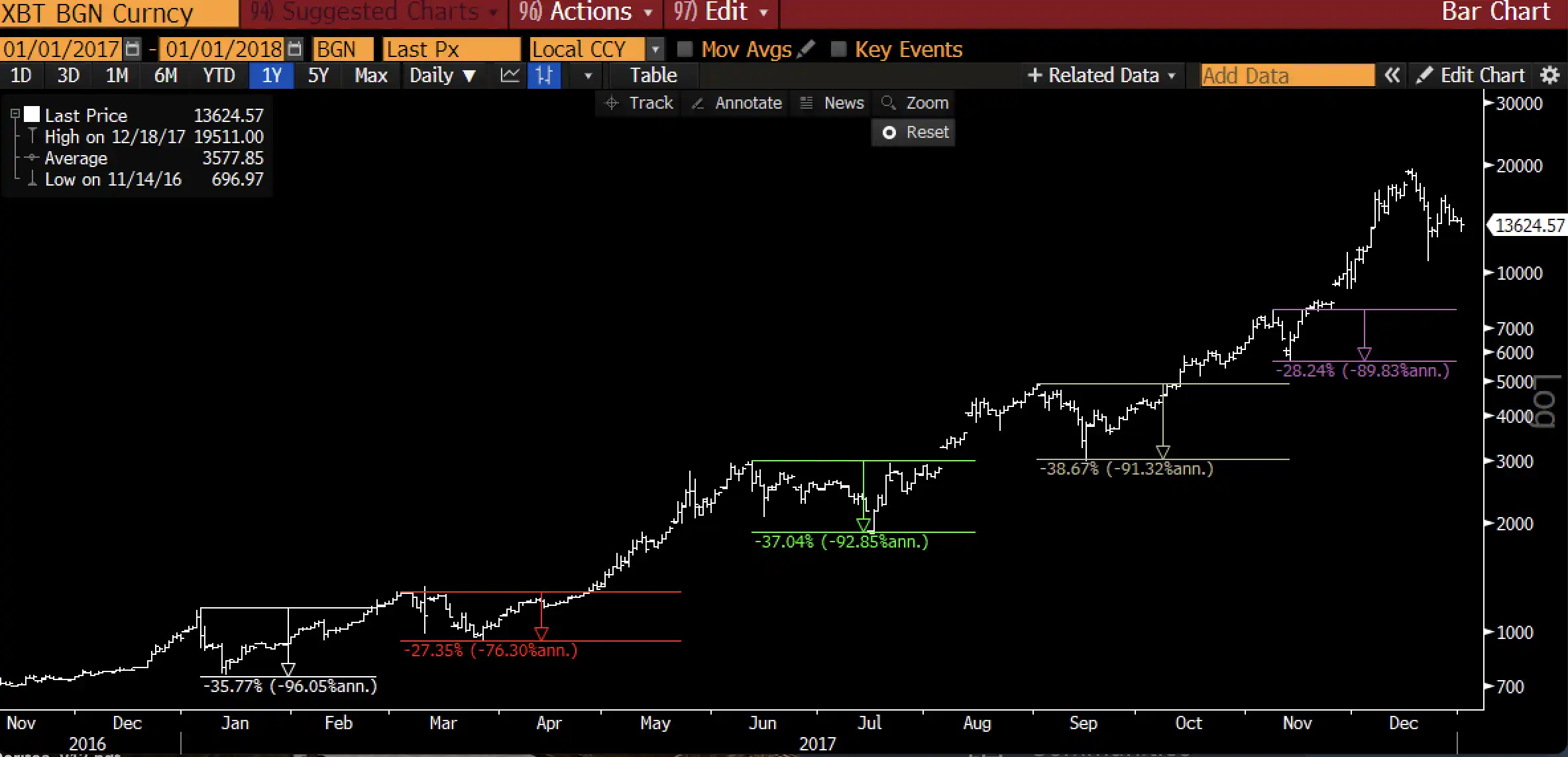
Everyone needs to remain patient, as the current market environment is very similar to the macro structure of 2017: Bitcoin has experienced five pullbacks, each with a magnitude of over 28%, and most pullbacks lasted 2 to 3 months before seeing new all-time highs. At the same time, other coins (Alts) experienced around a 65% correction. During this stage, the market is filled with various noises and uncertainties. Therefore, we should focus our energy on activities that are more constructive than simply staring at the screen, rather than being troubled by market fluctuations.
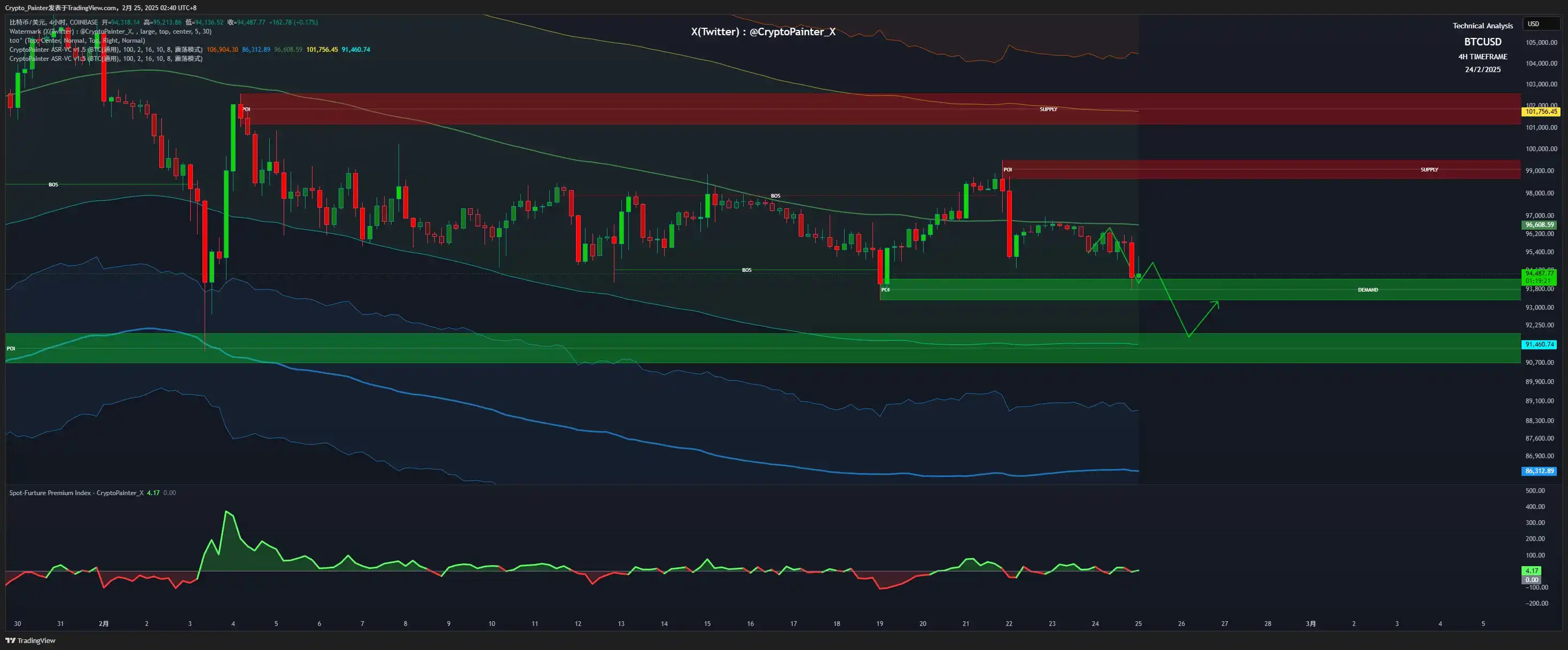
Technical analyst @CryptoPainter_X believes:
The current market's short-term trend has some support, but the overall situation is still within a range. After touching the 4-hour sub-demand zone, there may be short-term support, especially when the spot premium is oscillating near the 0 axis without breaking out of the range. Since small support zones within ranges are usually easily broken, attention is needed to see if the previous rhythm continues. If the small support is broken, it may indicate a continuation of the downward range in the oscillation.
Furthermore, the current price is close to the lower limit of the oscillation channel at 91400 (blue line), and the candlestick has not shown a long pin. The short-term rebound strength will determine the next trend. The blue line coincides with the core demand area, theoretically providing short-term support. However, as the channel is about to trend downwards and may turn, the long-term trend still leans towards bearishness, suggesting that the market may face further downward pressure.
Overall, although a short-term rebound may occur, if the midline is not broken or if the range is not breached, the market may still maintain a weakly oscillating trend.
You may also like

Japan’s Three Megabanks Plan Joint Stablecoin Issuance in Fiscal 2026
MUFG, SMBC, and Mizuho reportedly plan to jointly issue fiat-pegged stablecoins in fiscal 2026, signaling Japan’s growing push into bank-led digital payment infrastructure.

Humanity Discloses H Token Dual-Chain Attack Details, With Losses on Ethereum and BSC Exceeding $36 Million
Humanity said the H token attack across Ethereum and BSC caused more than $36 million in losses after leaked ProxyAdmin keys enabled malicious contract upgrades and token minting.

White House Discusses CLARITY Act With Law Enforcement Ahead of Senate Vote
The White House discussed the CLARITY Act with law enforcement ahead of a Senate vote, focusing on illicit finance risks and developer protections.

$75 billion in foreign capital has fled, and South Korean retail investors have absorbed it all using leverage

Bitcoin Trading Guide 2026: Strategies for Experienced Traders

What Is XAUT and PAXG? Why Tokenized Gold Is Booming in 2026

Cryptocurrency CEXs are flocking to sell US stocks, and traditional brokerages are facing an "uninvited guest."

Will the SpaceX IPO Hurt Bitcoin? Here's What Traders Are Watching
Foreign selling in the South Korean stock market accelerates, with cumulative net sales reportedly reaching $75 billion this year
On June 9, The Kobeissi Letter, citing Goldman Sachs data, reported that global investors are selling South Korean stocks at an unusually rapid pace. In the latest trading session, foreign investors sold about $801 million worth of Kospi constituent stocks again; total foreign outflows last week reached about $10 billion, and the market has been in net foreign selling on nearly every trading day over the past month. According to the data cited in the report, foreign investors have sold about $75 billion worth of South Korean stocks so far this year. Meanwhile, South Korean retail and institutional investors together recorded roughly $69 billion in net buying over the same period, suggesting that the market’s main buying support has come from domestic capital rather than returning overseas funds. The information currently disclosed still mainly comes from The Kobeissi Letter’s retelling and Goldman Sachs data summaries, while public details on the statistical period and the specific definition of “selling” remain relatively limited.

Fortune Warns of Strategy’s Financing Structure Risks as Bitcoin Premium Narrows
Fortune warned that Strategy’s Bitcoin treasury model faces growing financing risks as MSTR’s net asset premium narrows and preferred stock dividend pressure increases.

Ferrari Challenge Le Mans: Carl Moon to Dominate in WEEX Livery

Sahara AI Responds to SAHARA’s Sharp Drop: No Contract or Product Security Issues Found, Internal Investigation Underway
Sahara AI responded to SAHARA’s 60% price drop, saying no token contract or product security issues have been found and an internal investigation is underway.

WEEX Deposit/Withdrawal Dynamic Island: Your Asset Status, Always in Sight
Scaling Crypto Derivatives: The Digital Asset Infrastructure Behind High-Volume Trading
In the fast-moving digital asset ecosystem, derivatives platforms face an extreme architectural test. High-leverage futures markets demand more than just standard security—they require absolute operational precision, zero-latency matching engines, and ironclad structural scalability, all while navigating intense market volatility.
As global platforms scale to meet these demands, the industry is shifting away from rigid, monolithic setups toward a more agile, "decoupled" infrastructure philosophy.
The Blueprint for High-Volume Copy TradingFor elite global exchanges like WEEX (founded in 2018), this architectural choice becomes critical when scaling high-volume retail features like social copy trading. When thousands of users automatically mirror the real-time strategies of elite traders simultaneously, it triggers sudden, monumental spikes in concurrent transactional volume.
To prevent execution latency or settlement bottlenecks during these peak volatility events, a platform's primary engine must remain entirely dedicated to risk management, copy-trade synchronization, and order matching.
The Architectural Rule: New-generation platforms must separate front-end user execution engines from heavy backend infrastructural overhead to eliminate operational friction.
By separating these layers, platforms can maintain complete sovereignty over their trading environments and user experiences while strategically aligning with institutional-grade infrastructure ecosystems. This strategic framework allows modern exchanges to leverage advanced Digital Asset Custody infrastructure such as Cobo’s behind the scenes, ensuring that backend wallet management scales elastically alongside trading spikes.
Capitalizing on Market Momentum and 400× LeverageIn a derivatives arena where platforms offer up to 400× leverage on perpetual contracts, capital efficiency and market agility are core business metrics. To capture market momentum, an exchange needs the ability to rapidly expand its asset offerings, supporting everything from legacy crypto assets to sudden, trending altcoins across a massive library of trading pairs.
Adopting a flexible, scalable Wallet-as-a-Service (WaaS) solution such as Cobo’s could completely rewrite the development timeline for high-growth exchanges. Instead of spending months of engineering capital building out custom backend wallet architectures for every new blockchain network, platforms can deploy localized infrastructure in days.
This agility allows platforms to instantly scale their listings to over a thousand trading pairs without compromising security or delaying time-to-market. It mirrors the exact operational advantages seen during high-velocity market events, similar to how advanced wallet infrastructure empowers platforms during sudden asset surges; allowing exchanges to pass that speed and liquidity directly to their global user base.
A Mature Foundation for GrowthThe synergy between trusted infrastructure ecosystems and global trading platforms represents the natural evolution of a maturing crypto market. As WEEX continues to scale its global spot and derivatives offerings for over 6 million users, adopting robust backend paradigms proves that platforms no longer have to compromise between cutting-edge trading velocity and uncompromised structural security.

Morning Report | BitMine increased its holdings by 126,971 ETH last week; trader Eugene announced his exit from the crypto market

Wang Chuan: How can one not feel anxious after the neighbor Old Wang made thirty times profit by investing in storage stocks? (Seven) - A quarter-century cycle

Get Paid to Onboard? Try WEEX’s New Homepage with Rewards for Registration, Deposit & Trade
WEEX Custom Layout: Build Your Perfect Trading Workspace in Seconds
Japan’s Three Megabanks Plan Joint Stablecoin Issuance in Fiscal 2026
MUFG, SMBC, and Mizuho reportedly plan to jointly issue fiat-pegged stablecoins in fiscal 2026, signaling Japan’s growing push into bank-led digital payment infrastructure.
Humanity Discloses H Token Dual-Chain Attack Details, With Losses on Ethereum and BSC Exceeding $36 Million
Humanity said the H token attack across Ethereum and BSC caused more than $36 million in losses after leaked ProxyAdmin keys enabled malicious contract upgrades and token minting.
White House Discusses CLARITY Act With Law Enforcement Ahead of Senate Vote
The White House discussed the CLARITY Act with law enforcement ahead of a Senate vote, focusing on illicit finance risks and developer protections.
$75 billion in foreign capital has fled, and South Korean retail investors have absorbed it all using leverage
Bitcoin Trading Guide 2026: Strategies for Experienced Traders
What Is XAUT and PAXG? Why Tokenized Gold Is Booming in 2026


