
After a 40% Reduction in Staff, Twitter's Founder to Give Away $1 Million in Bitcoin

On the early morning of April 6, Block posted a tweet on X: "The bitcoin faucet is back." The link pointed to btc.day. Jack Dorsey subsequently retweeted.
"Faucet" is a very old term in the crypto industry and also a very old way of doing things: receiving free tokens to your wallet. This culture can be traced back to as early as 2010 when Bitcoin was less than two years old, worth just a few cents, with almost no one aware of its existence or what it would eventually become.
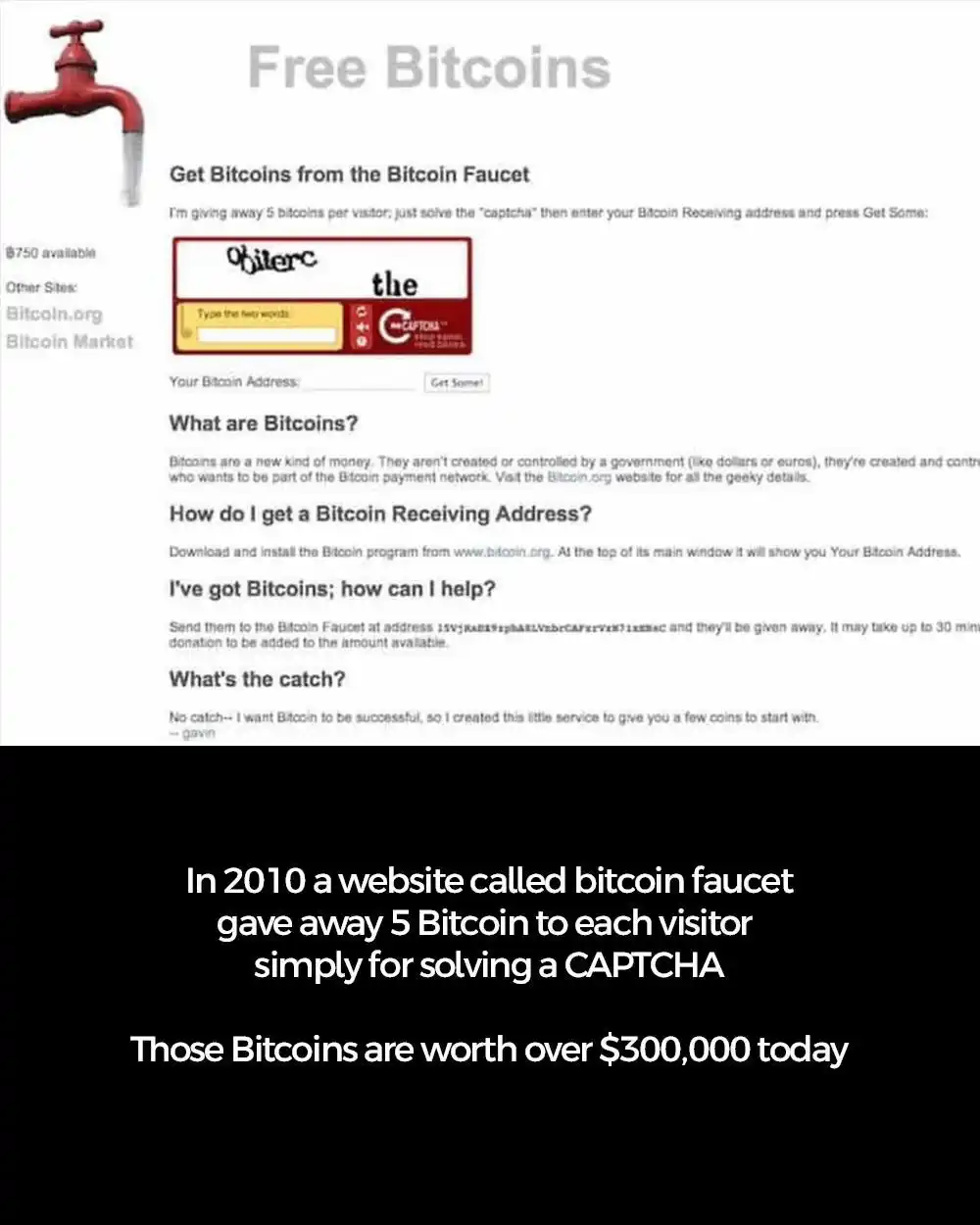
Early developer Gavin Andresen sat in front of his computer, using his own BTC, to set up a rudimentary webpage. He was one of the core developers in Satoshi Nakamoto's early circle, with high-ranking code contributions. However, he created this page not for project promotion or storytelling for fundraising. He simply felt that for this network to survive, more people needed to actually hold Bitcoin, experience this peer-to-peer payment network firsthand, and not just discuss it on mailing lists.
The logic of the page was simple: you come, solve a captcha, and 5 BTC goes into your wallet, done. There was no minimum purchase requirement, no account linking, no additional conditions. Anyone could visit, claim, and leave.
The page ran for several months, with Andresen using his own BTC for supply until it was almost depleted, then he shut it down. In total, he gave out approximately 19,700 BTC.
At today's price of about $67,000, that's about $1.3 billion.
This "faucet" culture has not disappeared from the crypto industry.
"Faucet Is Back"
Returning to Jack Dorsey, we all know him as the co-founder of Twitter (now X), but in recent years, he has completely shifted his focus to Block, formerly known as Square, a fintech company with Bitcoin at its core strategic focus.
Key products under Block include:
- Cash App: a mobile payment and Bitcoin purchase platform for regular users;
- Square: a payment terminal and point-of-sale system for merchants;
- Bitkey: Block's self-developed Bitcoin hardware wallet, focusing on Self-Custody;
- Proto Rig: Block's modular Bitcoin miner launched in August 2025;
Jack Dorsey himself is a staunch Bitcoin believer, having publicly stated: "Bitcoin will become the native currency of the Internet, and fiat currency will disappear in the future." All his business strategies are built around this belief.
Returning to Block's activities, we can see that the rewards on the page are divided into three tiers: buy BTC worth over $10 on Cash App, get $5 in BTC back; pay Square merchants with Bitcoin, get $25 in BTC back; withdraw BTC to the Bitkey hardware wallet, get $50 in BTC back.
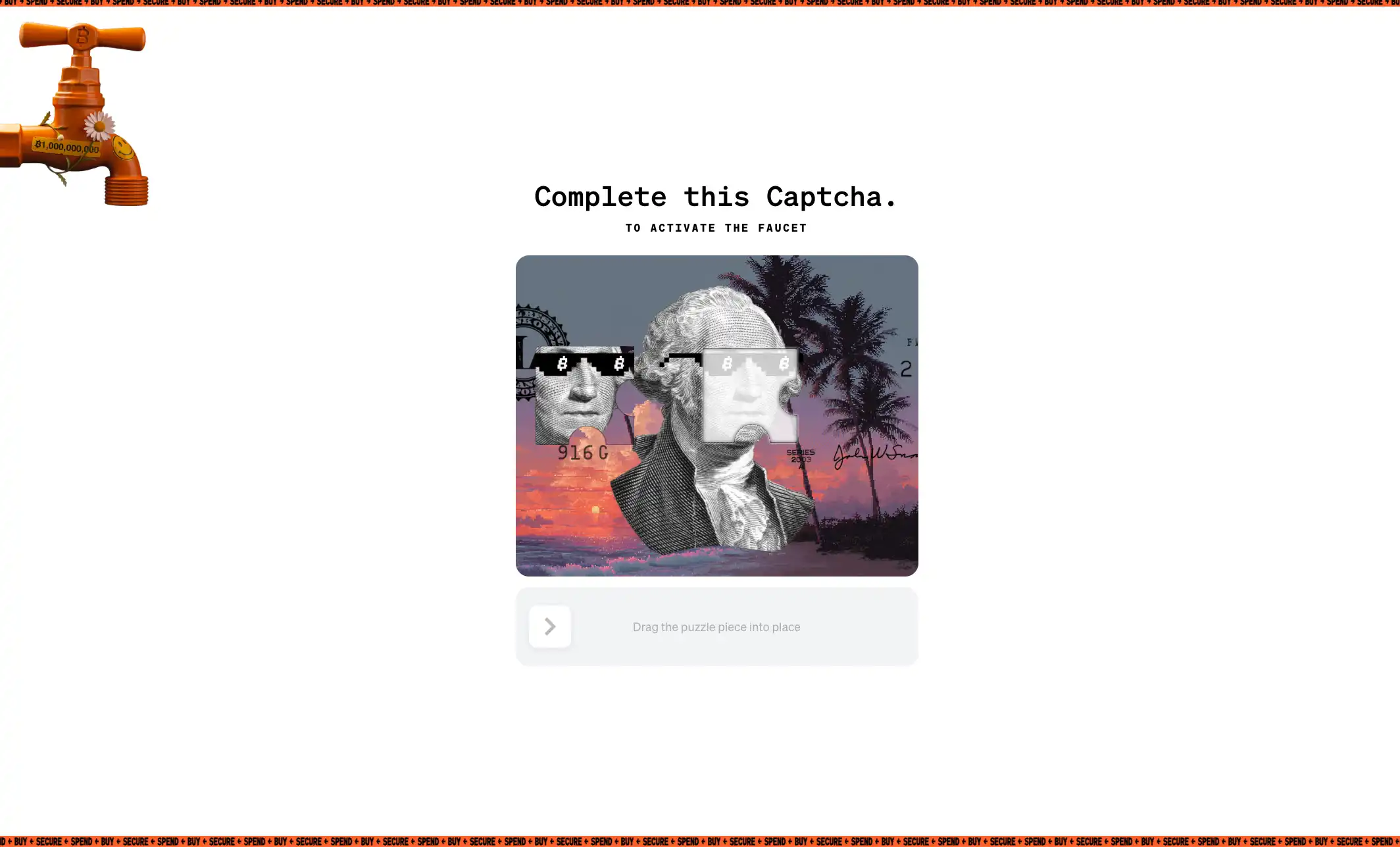
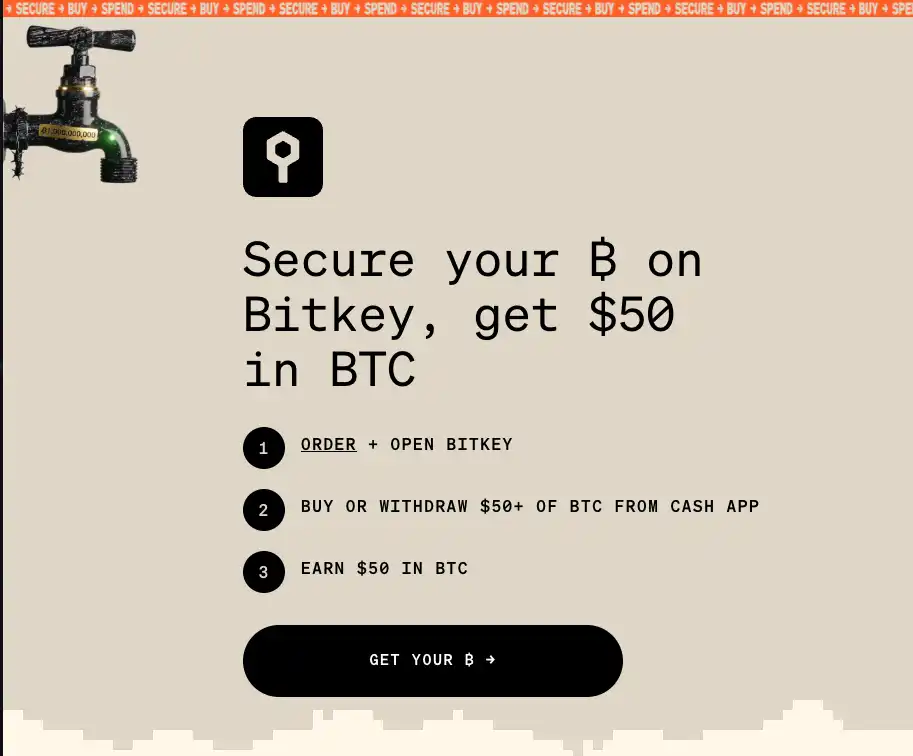
btc.day Activity Page
By completing all three tasks, you can receive up to $80 in BTC.
A total reward pool of $1 million, the event ends on April 10, first come, first served, available only to U.S. residents aged 18 and above. There's a detail in the terms: New York residents can buy BTC on Cash App, but they cannot receive the rewards for Square payments and Bitkey withdrawals. New York's cryptocurrency licensing rules have excluded these two actions.
Looking at the three reward tiers side by side, the structure is also very clear, with each reward tier linked to a specific product line in the Block ecosystem:
For the $5 tier, it incentivizes users to make their first BTC purchase within the Cash App, establishing a buying habit;
For the $25 tier, it encourages users to try using Bitcoin to make purchases at physical stores, specifically within the Square merchant network;
As for the $50 reward, the highest one, it incentivizes users to transfer Bitcoin to their self-controlled Bitkey hardware wallet, promoting the idea of self-custody. This happens to be the step Block most wants to promote.
The Block, acquired for $1 million, is a deep experience of its three product lines by a large number of real users, which is more cost-effective than any advertisement.
The event was launched when the Bitcoin price was around $67,000, experiencing a nearly 50% pullback from the peak of $126,000 at the end of 2025. Proactively taking action amidst a low market sentiment, the company introduced the "Free BTC Giveaway" event. This move not only attracts cautious users but also conveys The Block's strong confidence in Bitcoin's long-term value.
On the other hand, this also aligns with Jack Dorsey's vision of financial inclusion. Jack Dorsey has long advocated that Bitcoin is not just an investment tool but also a financial instrument for ordinary people in emerging markets to bypass the traditional banking system. Bitcoin Day is the practical realization of this concept, lowering the entry barrier and enabling more people to truly "hold" Bitcoin for the first time.
The Radical Transformation of The Block
The Block, making this judgment, is already a thoroughly transformed company.
On February 26, 2026, The Block announced the layoff of about 4,000 people, accounting for 40% of the total workforce, reducing from 10,000 to less than 6,000 employees. After the layoff news, the stock price surged from over $50 to nearly $90.
In an internal memo, Jack Dorsey wrote that he wanted the company to "feel uncomfortably lean." Meanwhile, the company's in-house AI tool, Goose (built on the Model Context Protocol), was already responsible for around 90% of code commits.
Prior to this downsizing, The Block also shut down its long-running decentralized web project TBD, reallocating resources entirely to Bitcoin mining machines and the Bitkey ecosystem. In August 2025, The Block launched the Proto Rig, a modular Bitcoin mining machine aimed at breaking Bitmain's roughly 80% market share, along with the open-source mining farm management software, Proto Fleet.
The Block currently holds 8,883 BTC, with an average acquisition cost of around $33,000 per BTC and a current unrealized gain of about 103%. With BTC now around $67,000, down nearly half from the peak of $126,000 at the end of 2025, Jack Dorsey has not reduced his position at the peak nor stopped betting.
Community and Market Response
Following the announcement, the cryptocurrency community's response was generally positive, seeing this move as a "return to Bitcoin's roots." Analysts pointed out that the launch of Bitcoin Day may significantly increase BTC purchases within Cash App around April 6, with short-term trading volume potentially experiencing fluctuations.
However, there were also criticisms focused on: the reward cap being only $80, limiting its appeal to true "newbies"; the requirement to have an existing Cash App account to participate, closing off access to non-U.S. users entirely; fundamentally being a customer acquisition marketing effort for Block's own product, differing from Andresen's purely altruistic nature back in the day.
Nevertheless, most observers believe that obtaining hundreds of thousands of users for $1 million in a real product experience is a highly cost-effective marketing strategy for Block.
Looking back 16 years ago, when Andresen shut down the page, he had no idea those 19,700 coins would be worth so much. What he did, would be called "user acquisition" in today's terms, but his intention back then was not a business model, but a belief. He believed the Bitcoin network needed genuine participants. All he could offer was his own Bitcoin, and he gave it away.
The result was that thousands of strangers owned Bitcoin for the first time in a few months, not bought, but given by others. This is precisely the core spirit behind Dorsey's current event.
Jack Dorsey's Bitcoin Day event is an expression of belief that spans history and reality. It takes the seed of "changing the world with free Bitcoin" from 16 years ago and replants it in Block's business soil.
You may also like

Cryptocurrency CEXs are flocking to sell US stocks, and traditional brokerages are facing an "uninvited guest."

Will the SpaceX IPO Hurt Bitcoin? Here's What Traders Are Watching
Foreign selling in the South Korean stock market accelerates, with cumulative net sales reportedly reaching $75 billion this year
On June 9, The Kobeissi Letter, citing Goldman Sachs data, reported that global investors are selling South Korean stocks at an unusually rapid pace. In the latest trading session, foreign investors sold about $801 million worth of Kospi constituent stocks again; total foreign outflows last week reached about $10 billion, and the market has been in net foreign selling on nearly every trading day over the past month. According to the data cited in the report, foreign investors have sold about $75 billion worth of South Korean stocks so far this year. Meanwhile, South Korean retail and institutional investors together recorded roughly $69 billion in net buying over the same period, suggesting that the market’s main buying support has come from domestic capital rather than returning overseas funds. The information currently disclosed still mainly comes from The Kobeissi Letter’s retelling and Goldman Sachs data summaries, while public details on the statistical period and the specific definition of “selling” remain relatively limited.

Fortune Warns of Strategy’s Financing Structure Risks as Bitcoin Premium Narrows
Fortune warned that Strategy’s Bitcoin treasury model faces growing financing risks as MSTR’s net asset premium narrows and preferred stock dividend pressure increases.

Ferrari Challenge Le Mans: Carl Moon to Dominate in WEEX Livery

Sahara AI Responds to SAHARA’s Sharp Drop: No Contract or Product Security Issues Found, Internal Investigation Underway
Sahara AI responded to SAHARA’s 60% price drop, saying no token contract or product security issues have been found and an internal investigation is underway.

WEEX Deposit/Withdrawal Dynamic Island: Your Asset Status, Always in Sight

Scaling Crypto Derivatives: The Digital Asset Infrastructure Behind High-Volume Trading
In the fast-moving digital asset ecosystem, derivatives platforms face an extreme architectural test. High-leverage futures markets demand more than just standard security—they require absolute operational precision, zero-latency matching engines, and ironclad structural scalability, all while navigating intense market volatility.
As global platforms scale to meet these demands, the industry is shifting away from rigid, monolithic setups toward a more agile, "decoupled" infrastructure philosophy.
The Blueprint for High-Volume Copy TradingFor elite global exchanges like WEEX (founded in 2018), this architectural choice becomes critical when scaling high-volume retail features like social copy trading. When thousands of users automatically mirror the real-time strategies of elite traders simultaneously, it triggers sudden, monumental spikes in concurrent transactional volume.
To prevent execution latency or settlement bottlenecks during these peak volatility events, a platform's primary engine must remain entirely dedicated to risk management, copy-trade synchronization, and order matching.
The Architectural Rule: New-generation platforms must separate front-end user execution engines from heavy backend infrastructural overhead to eliminate operational friction.
By separating these layers, platforms can maintain complete sovereignty over their trading environments and user experiences while strategically aligning with institutional-grade infrastructure ecosystems. This strategic framework allows modern exchanges to leverage advanced Digital Asset Custody infrastructure such as Cobo’s behind the scenes, ensuring that backend wallet management scales elastically alongside trading spikes.
Capitalizing on Market Momentum and 400× LeverageIn a derivatives arena where platforms offer up to 400× leverage on perpetual contracts, capital efficiency and market agility are core business metrics. To capture market momentum, an exchange needs the ability to rapidly expand its asset offerings, supporting everything from legacy crypto assets to sudden, trending altcoins across a massive library of trading pairs.
Adopting a flexible, scalable Wallet-as-a-Service (WaaS) solution such as Cobo’s could completely rewrite the development timeline for high-growth exchanges. Instead of spending months of engineering capital building out custom backend wallet architectures for every new blockchain network, platforms can deploy localized infrastructure in days.
This agility allows platforms to instantly scale their listings to over a thousand trading pairs without compromising security or delaying time-to-market. It mirrors the exact operational advantages seen during high-velocity market events, similar to how advanced wallet infrastructure empowers platforms during sudden asset surges; allowing exchanges to pass that speed and liquidity directly to their global user base.
A Mature Foundation for GrowthThe synergy between trusted infrastructure ecosystems and global trading platforms represents the natural evolution of a maturing crypto market. As WEEX continues to scale its global spot and derivatives offerings for over 6 million users, adopting robust backend paradigms proves that platforms no longer have to compromise between cutting-edge trading velocity and uncompromised structural security.

Morning Report | BitMine increased its holdings by 126,971 ETH last week; trader Eugene announced his exit from the crypto market

Wang Chuan: How can one not feel anxious after the neighbor Old Wang made thirty times profit by investing in storage stocks? (Seven) - A quarter-century cycle

Get Paid to Onboard? Try WEEX’s New Homepage with Rewards for Registration, Deposit & Trade

WEEX Custom Layout: Build Your Perfect Trading Workspace in Seconds

See “Buy Walls” & “Sell Walls” Instantly: WEEX Launches the Depth Chart for Smarter Trades

What Is Quick Trade on WEEX? 2 Ways WEEX Ends Chart-Panel Jumping
Morning News | Five major virtual asset platforms in South Korea have experienced 57 incidents of hacking and system failures in six years; Grayscale submits registration application for Canton ETF

Should we escape the peak? The principle of the tail-end market in the stock market

RootData: May 2026 Cryptocurrency Exchange Transparency Research Report

Founder of Baixing.com: My Experience with Claude Code in Fourteen Points
Cryptocurrency CEXs are flocking to sell US stocks, and traditional brokerages are facing an "uninvited guest."
Will the SpaceX IPO Hurt Bitcoin? Here's What Traders Are Watching
Foreign selling in the South Korean stock market accelerates, with cumulative net sales reportedly reaching $75 billion this year
On June 9, The Kobeissi Letter, citing Goldman Sachs data, reported that global investors are selling South Korean stocks at an unusually rapid pace. In the latest trading session, foreign investors sold about $801 million worth of Kospi constituent stocks again; total foreign outflows last week reached about $10 billion, and the market has been in net foreign selling on nearly every trading day over the past month. According to the data cited in the report, foreign investors have sold about $75 billion worth of South Korean stocks so far this year. Meanwhile, South Korean retail and institutional investors together recorded roughly $69 billion in net buying over the same period, suggesting that the market’s main buying support has come from domestic capital rather than returning overseas funds. The information currently disclosed still mainly comes from The Kobeissi Letter’s retelling and Goldman Sachs data summaries, while public details on the statistical period and the specific definition of “selling” remain relatively limited.
Fortune Warns of Strategy’s Financing Structure Risks as Bitcoin Premium Narrows
Fortune warned that Strategy’s Bitcoin treasury model faces growing financing risks as MSTR’s net asset premium narrows and preferred stock dividend pressure increases.
Ferrari Challenge Le Mans: Carl Moon to Dominate in WEEX Livery
Sahara AI Responds to SAHARA’s Sharp Drop: No Contract or Product Security Issues Found, Internal Investigation Underway
Sahara AI responded to SAHARA’s 60% price drop, saying no token contract or product security issues have been found and an internal investigation is underway.


