
Frequent Success: How Did North Korea Cultivate Hackers?

原文标题:《再次盗取 15 亿美元加密货币,朝鲜如何培养出世界一流黑客的?》
原文来源:深潮 TechFlow
2 月 21 日,加密货币交易所 Bybit 遭遇 15 亿美元黑客攻击事件,再次将朝鲜黑客组织 Lazarus Group 所为推到风口浪尖。
近几年,这个组织屡屡得手,从 KuCoin 交易所被盗到 Ronin 跨链桥被盗,甚至是 Defiance Capital 创始人个人钱包被黑,幕后黑手都是这家神秘黑客组织。
你或许好奇,作为一个全球最封闭的国家,朝鲜是如何在数字战场上培养出如此惊人的力量?
在传统军事领域,朝鲜难以与美韩联盟抗衡,但网络战为其提供了"四两拨千斤"的战略杠杆。
于是上世界从 80 年代开始,朝鲜政府耗费了大量力气进行黑客培训,内部制定代号为「Secret War」。
2007 年叛逃到韩国的朝鲜人 Jang Se-yul,早前就读于朝鲜的顶级工科学校 Mirim University(现在更名为 University of Automation 朝鲜自动化大学)。大学期间,Jang 曾与其他黑客们修读了 121 局开设的课程。
毕业后,Jang 加入了朝鲜政府侦察总局,121 局便是旗下的精英间谍机构。也就是在那时,他开始接触 121 局中的顶级黑客们。
Jang Se-yul 后来接受 Business Insider 采访时表示,与朝鲜的核威胁相比,其网络战的威胁更实际、也更危险。他说:「这是一场无声的战争。一枪未发就已经开战。」
问题是,一个如此穷苦、资源如此贫乏的国家是如何下大力气去搞网络战?
Jang Se-yul 的回答是:因为培养一名黑客十分便宜。
通常来说,朝鲜分为基本群众 (核心阶层)、复杂群众 (普通中间阶层)、敌对阶级残余分子 (地主、富农后代等敌对阶层) 等三大阶层,下面再分为 56 个阶层。这些阶层分类都记载在居民台账上,在干部录用过程中使用。
世界朝鲜研究中心理事长安赞日表示,过去朝鲜黑客也是要看出身背景的职业,因为如果他们对党的忠诚度下降,将对体制造成威胁。
直到后来国际社会全方位对朝鲜实施制裁,朝鲜赚取外汇途径受阻后,只能通过在网络攻击非法赚取外汇。
这也为网络战人才开辟了特殊通道,不拘一格降人才。
Jang 的母校——自动化大学,就是朝鲜黑客培养的核心基地,他表示「每个班级只招收 100 名学生,但申请者多达 5000 人。」
可以说这是高考的 PLUS 版本,一旦申请成功,成为黑客,就可以成为朝鲜最上层那 1% 的人,只是这个过程也格外艰辛。
这些年轻黑客出师之前,要接受近 9 年的严格训练,最小的从 17 岁开始就接受训练。
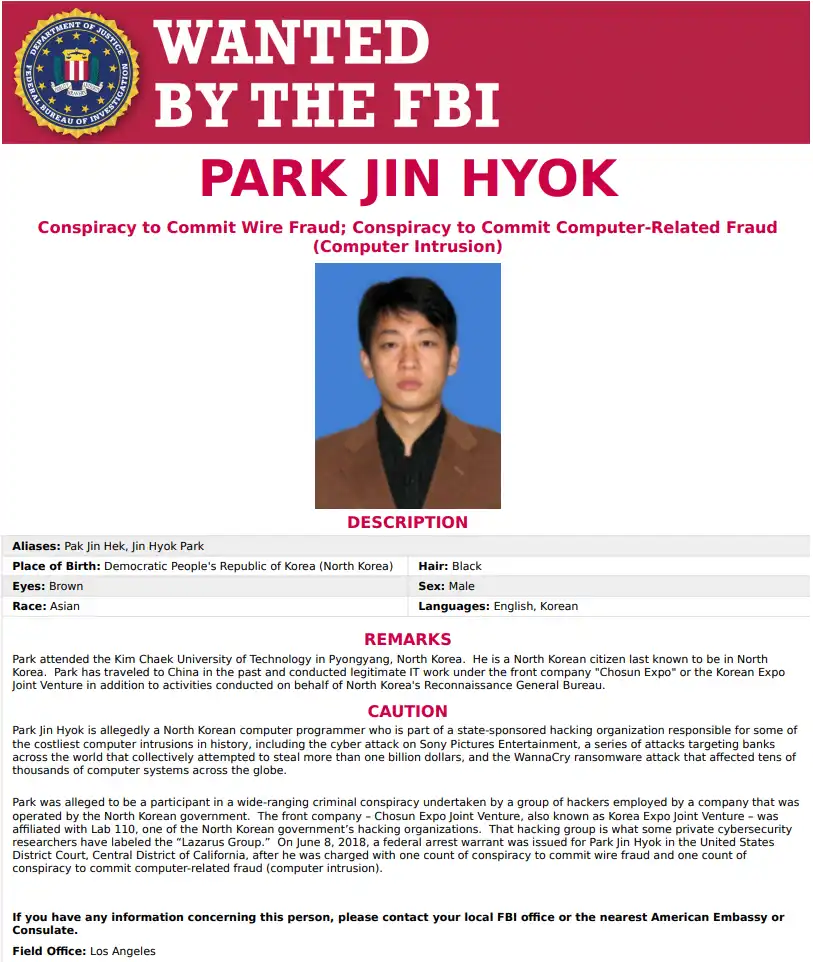
在学校的时候,他们每天上六节课,每节课 90 分钟,学习各种编程语言和操作系统。每天花大量的时间分析微软的 Windows 操作系统等程序,研究如何攻破美国、韩国等敌对国家的电脑信息系统。
此外,他们的核心任务是开发出自己的黑客程序和电脑病毒,而不必依靠外面现有的黑客程序。
在 Jang 看来,朝鲜的黑客,其技术水平毫不逊色于谷歌或是中情局的顶级程序员,甚至有可能更好。
从接受教育的第一天开始,这些「黑小将」们就被赋予了使命和目标,会分为不同的组别,专注攻击不同的国家地区,例如美国、朝鲜和日本。黑客一旦被分进特定的「国家组」,他们会花费将近两年时间卧底进入该国家,学习当地的语言文化知识,以便在技术之外,也不露处破绽。
Jang 称,他的一个朋友就为 121 局的一个海外部门工作,但他表面上是朝鲜一家贸易公司的职员。没有人知道他的真实身份,而他的公司也在正常经营业务。
由于网络战的特殊性,这些年轻黑客可以自由使用互联网,第一时间掌握到国外的最新动态,并且也深知自己的国家非常「封闭保守」,但是这并不会动摇他们的爱国之心与对领袖的忠诚。
「哪怕是别人强制性的劝说,甚至是给他们提供韩国总统府的工作,他们也不会背弃自己的国家。」Jang 如此表示。
当然,一旦成为黑客,也就意味着金钱与特权。
年轻黑客月薪可达 2000 美元,是驻外大使的两倍。除此之外,他们还能获得平壤市中心超过 185 平米的豪华公寓,并且可以将家人迁至首都,这无疑都是极其诱人的条件。
在键盘取代导弹的新时代,年轻黑客们的键盘将会成为加密货币的达摩克利斯之剑。
You may also like

Bitcoin Trading Guide 2026: Strategies for Experienced Traders

What Is XAUT and PAXG? Why Tokenized Gold Is Booming in 2026

Cryptocurrency CEXs are flocking to sell US stocks, and traditional brokerages are facing an "uninvited guest."

Will the SpaceX IPO Hurt Bitcoin? Here's What Traders Are Watching
Foreign selling in the South Korean stock market accelerates, with cumulative net sales reportedly reaching $75 billion this year
On June 9, The Kobeissi Letter, citing Goldman Sachs data, reported that global investors are selling South Korean stocks at an unusually rapid pace. In the latest trading session, foreign investors sold about $801 million worth of Kospi constituent stocks again; total foreign outflows last week reached about $10 billion, and the market has been in net foreign selling on nearly every trading day over the past month. According to the data cited in the report, foreign investors have sold about $75 billion worth of South Korean stocks so far this year. Meanwhile, South Korean retail and institutional investors together recorded roughly $69 billion in net buying over the same period, suggesting that the market’s main buying support has come from domestic capital rather than returning overseas funds. The information currently disclosed still mainly comes from The Kobeissi Letter’s retelling and Goldman Sachs data summaries, while public details on the statistical period and the specific definition of “selling” remain relatively limited.

Fortune Warns of Strategy’s Financing Structure Risks as Bitcoin Premium Narrows
Fortune warned that Strategy’s Bitcoin treasury model faces growing financing risks as MSTR’s net asset premium narrows and preferred stock dividend pressure increases.

Ferrari Challenge Le Mans: Carl Moon to Dominate in WEEX Livery

Sahara AI Responds to SAHARA’s Sharp Drop: No Contract or Product Security Issues Found, Internal Investigation Underway
Sahara AI responded to SAHARA’s 60% price drop, saying no token contract or product security issues have been found and an internal investigation is underway.

WEEX Deposit/Withdrawal Dynamic Island: Your Asset Status, Always in Sight

Scaling Crypto Derivatives: The Digital Asset Infrastructure Behind High-Volume Trading
In the fast-moving digital asset ecosystem, derivatives platforms face an extreme architectural test. High-leverage futures markets demand more than just standard security—they require absolute operational precision, zero-latency matching engines, and ironclad structural scalability, all while navigating intense market volatility.
As global platforms scale to meet these demands, the industry is shifting away from rigid, monolithic setups toward a more agile, "decoupled" infrastructure philosophy.
The Blueprint for High-Volume Copy TradingFor elite global exchanges like WEEX (founded in 2018), this architectural choice becomes critical when scaling high-volume retail features like social copy trading. When thousands of users automatically mirror the real-time strategies of elite traders simultaneously, it triggers sudden, monumental spikes in concurrent transactional volume.
To prevent execution latency or settlement bottlenecks during these peak volatility events, a platform's primary engine must remain entirely dedicated to risk management, copy-trade synchronization, and order matching.
The Architectural Rule: New-generation platforms must separate front-end user execution engines from heavy backend infrastructural overhead to eliminate operational friction.
By separating these layers, platforms can maintain complete sovereignty over their trading environments and user experiences while strategically aligning with institutional-grade infrastructure ecosystems. This strategic framework allows modern exchanges to leverage advanced Digital Asset Custody infrastructure such as Cobo’s behind the scenes, ensuring that backend wallet management scales elastically alongside trading spikes.
Capitalizing on Market Momentum and 400× LeverageIn a derivatives arena where platforms offer up to 400× leverage on perpetual contracts, capital efficiency and market agility are core business metrics. To capture market momentum, an exchange needs the ability to rapidly expand its asset offerings, supporting everything from legacy crypto assets to sudden, trending altcoins across a massive library of trading pairs.
Adopting a flexible, scalable Wallet-as-a-Service (WaaS) solution such as Cobo’s could completely rewrite the development timeline for high-growth exchanges. Instead of spending months of engineering capital building out custom backend wallet architectures for every new blockchain network, platforms can deploy localized infrastructure in days.
This agility allows platforms to instantly scale their listings to over a thousand trading pairs without compromising security or delaying time-to-market. It mirrors the exact operational advantages seen during high-velocity market events, similar to how advanced wallet infrastructure empowers platforms during sudden asset surges; allowing exchanges to pass that speed and liquidity directly to their global user base.
A Mature Foundation for GrowthThe synergy between trusted infrastructure ecosystems and global trading platforms represents the natural evolution of a maturing crypto market. As WEEX continues to scale its global spot and derivatives offerings for over 6 million users, adopting robust backend paradigms proves that platforms no longer have to compromise between cutting-edge trading velocity and uncompromised structural security.

Morning Report | BitMine increased its holdings by 126,971 ETH last week; trader Eugene announced his exit from the crypto market

Wang Chuan: How can one not feel anxious after the neighbor Old Wang made thirty times profit by investing in storage stocks? (Seven) - A quarter-century cycle

Get Paid to Onboard? Try WEEX’s New Homepage with Rewards for Registration, Deposit & Trade

WEEX Custom Layout: Build Your Perfect Trading Workspace in Seconds

See “Buy Walls” & “Sell Walls” Instantly: WEEX Launches the Depth Chart for Smarter Trades

What Is Quick Trade on WEEX? 2 Ways WEEX Ends Chart-Panel Jumping
Morning News | Five major virtual asset platforms in South Korea have experienced 57 incidents of hacking and system failures in six years; Grayscale submits registration application for Canton ETF
Should we escape the peak? The principle of the tail-end market in the stock market
Bitcoin Trading Guide 2026: Strategies for Experienced Traders
What Is XAUT and PAXG? Why Tokenized Gold Is Booming in 2026
Cryptocurrency CEXs are flocking to sell US stocks, and traditional brokerages are facing an "uninvited guest."
Will the SpaceX IPO Hurt Bitcoin? Here's What Traders Are Watching
Foreign selling in the South Korean stock market accelerates, with cumulative net sales reportedly reaching $75 billion this year
On June 9, The Kobeissi Letter, citing Goldman Sachs data, reported that global investors are selling South Korean stocks at an unusually rapid pace. In the latest trading session, foreign investors sold about $801 million worth of Kospi constituent stocks again; total foreign outflows last week reached about $10 billion, and the market has been in net foreign selling on nearly every trading day over the past month. According to the data cited in the report, foreign investors have sold about $75 billion worth of South Korean stocks so far this year. Meanwhile, South Korean retail and institutional investors together recorded roughly $69 billion in net buying over the same period, suggesting that the market’s main buying support has come from domestic capital rather than returning overseas funds. The information currently disclosed still mainly comes from The Kobeissi Letter’s retelling and Goldman Sachs data summaries, while public details on the statistical period and the specific definition of “selling” remain relatively limited.
Fortune Warns of Strategy’s Financing Structure Risks as Bitcoin Premium Narrows
Fortune warned that Strategy’s Bitcoin treasury model faces growing financing risks as MSTR’s net asset premium narrows and preferred stock dividend pressure increases.

Popular coins
Latest Crypto News


