
From Data Perspective on Crypto Company Changes: USDC Weekly Trading Volume Reaches $24 Billion

Original Article Title: How crypto data informs earnings
Original Article Author: The Kaiko Research Team
Original Article Translation: Deep Tide TechFlow
As the North American region rapidly resolves the tariff dispute, the global market is gradually stabilizing. At the same time, the United States is actively exploring the establishment of its own sovereign wealth fund, while cryptocurrency regulator David Sacks optimistically predicts that digital assets are about to enter a "golden age."
This week, we will delve into the following aspects:
· Coinbase's market performance ahead of its earnings report
· Significant growth in USDC trading volume on the Binance platform
· Trends in the altcoin market liquidity
How Crypto Data Has Become a Key Tool for Predicting Earnings
Coinbase Earnings Preview: Market Data Provides Early Insights
Coinbase will release its 2024 fourth-quarter earnings report this Thursday (February 13). Prior to this, by analyzing market data, we can gain preliminary insights into its performance. While analyst revenue expectations and outlook will have a direct impact on stock prices, cryptocurrency market data is often a crucial leading indicator of exchange health.
Data shows that Coinbase's weekly trading volume in the fourth quarter rose to the highest level in two years. This trend indicates that the platform benefited significantly from the market rebound after the U.S. election.
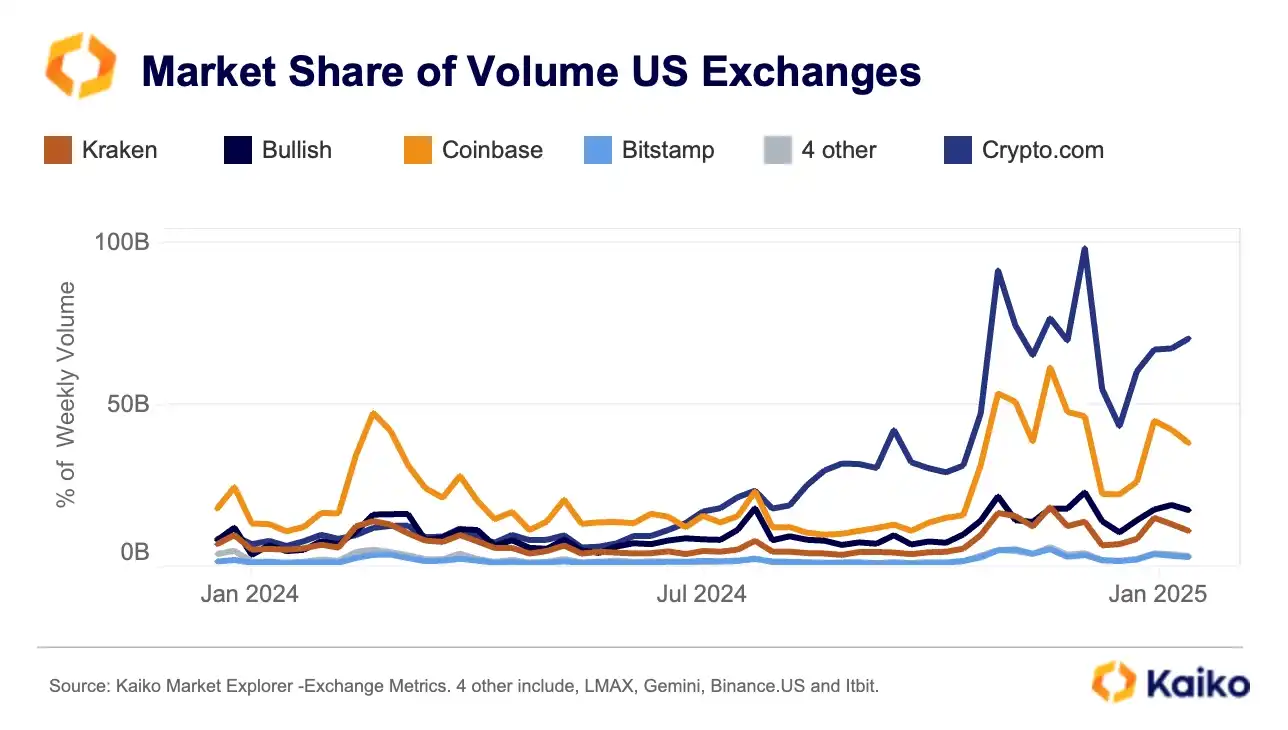
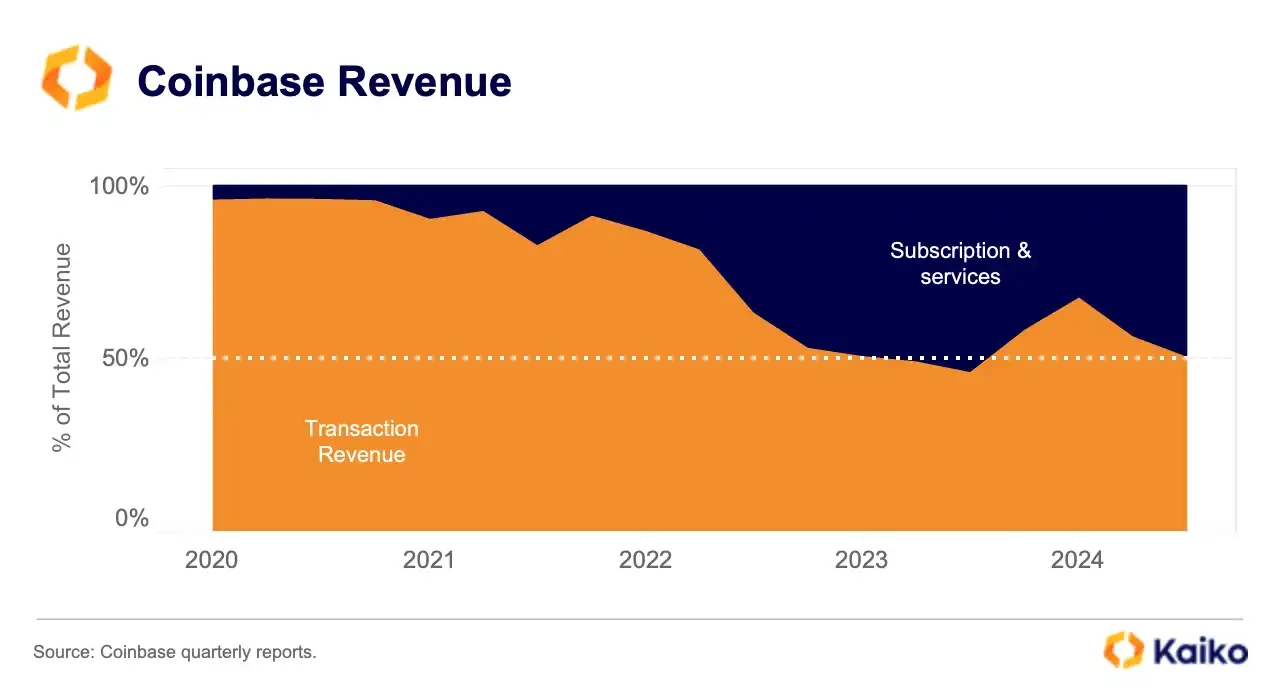
In recent years, Coinbase's revenue sources have become increasingly diversified, with its "Subscription and Services" business (including staking rewards, custody fees, and USDC interest) showing a significant increase in revenue share.
However, transaction revenue remains Coinbase's core business. Except for one quarter in 2023, transaction revenue has always accounted for over 50% of total revenue.
It is worth noting that subscription and service revenue is closely related to the overall activity of the cryptocurrency market and does not serve to diversify risk. Therefore, in case of low trading activity or market price decline, subscription and service revenue will also be significantly affected.
For example, in the third quarter of 2024, Coinbase's blockchain staking revenue decreased by 16% due to the price decline of ETH and SOL.
Through Kaiko's blockchain monitoring tool, it was found that the net flow on the Ethereum beacon chain decreased in the fourth quarter of 2024. As the second-largest ETH staking entity after Lido, Coinbase was one of the main contributors to this downward trend. Data shows that in the past six months, Coinbase's market share in the staking market has decreased by 3.8%, with a net outflow of 1.29 million ETH during the same period.

This trend indicates that although Coinbase still holds a significant position in the staking field, its market share is gradually being eroded by other competitors. This may have a detrimental impact on its long-term revenue growth and competitiveness.
Despite the price increase of ETH and SOL during the quarter partially mitigating the impact of staking reduction, the overall data still indicates that Coinbase's blockchain staking revenue may decline in the fourth quarter. In particular, in the ETH staking market, Coinbase's market share decreased by 3.8%, directly affecting its staking-related revenue.
Coinbase's business arrangement with Circle allows it to derive a stable revenue source from USDC-related income. It is worth noting that Circle's new partnership with Binance and record USDC trading volumes may to some extent counterbalance the decline in staking revenue. This provides Coinbase with additional revenue cushion, especially when staking and trading revenue face pressure.
Retail traders, as users paying the highest transaction fees, have seen their transaction volume share drop significantly from 40% in 2021 to the current 18%. While Coinbase's subscription services (such as blockchain staking and custody services) have seen growth, the exodus of retail traders still puts significant pressure on its trading revenue.
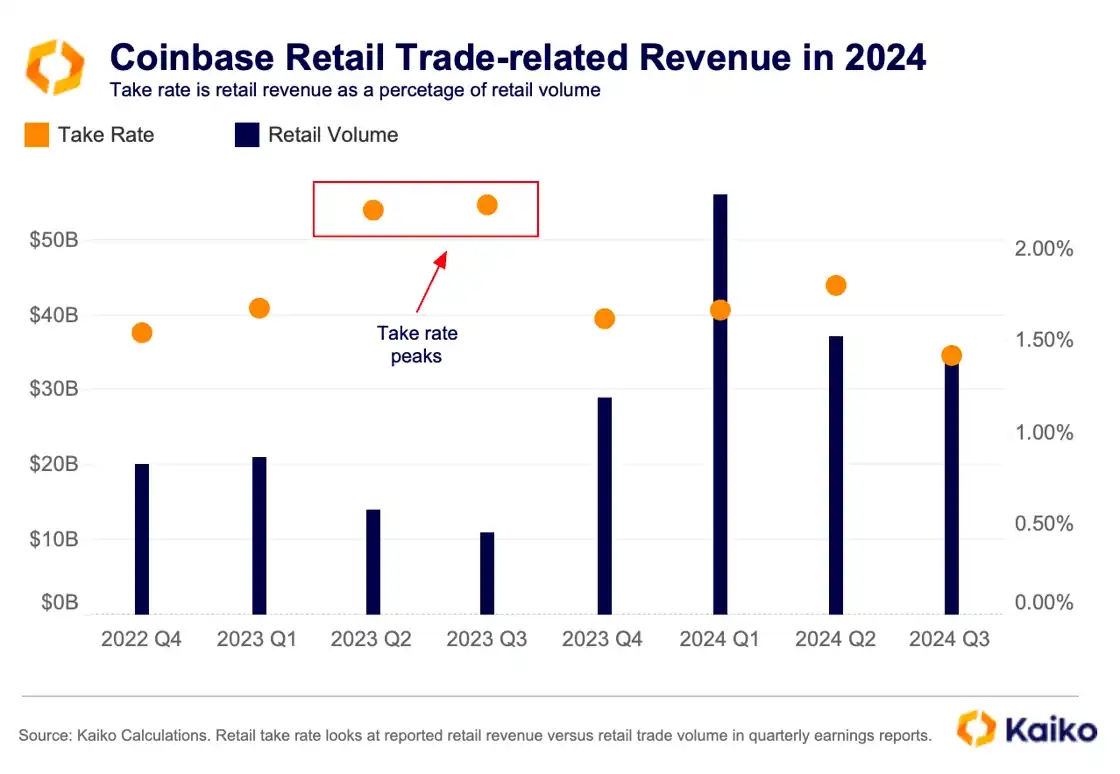
Since reaching its peak in mid-2023, Coinbase's "take rate" (i.e., the revenue share obtained from retail traders) has fallen to the lowest level since the Terra Luna crash in the first half of 2022.
The revenue decline comes at a time of intensified competition in the U.S. market, with some platforms attracting users by significantly reducing transaction fees, further exacerbating the pressure on platforms like Coinbase.
Although Coinbase remains one of the exchanges with the highest liquidity in the United States, its fee structure (more favorable to market makers than takers) has been relatively stable. However, the decrease in retail traders has undoubtedly intensified the pressure on this revenue source.
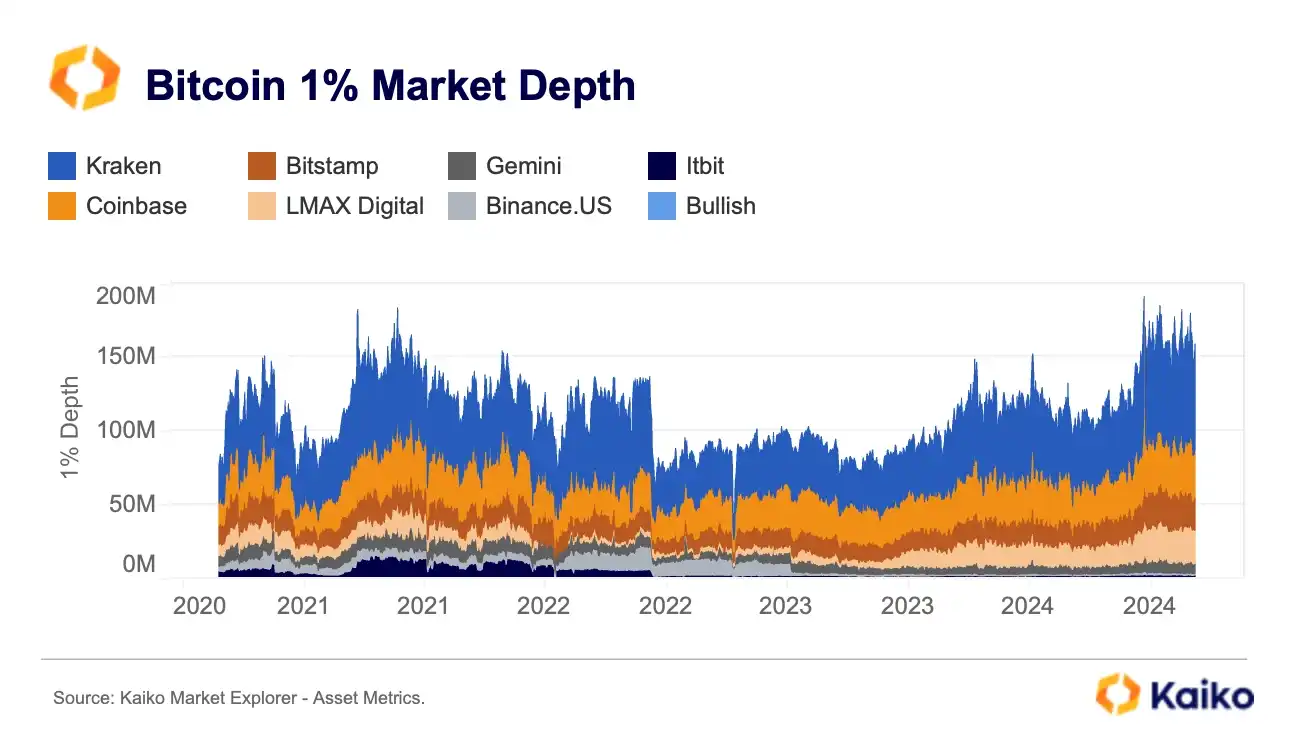
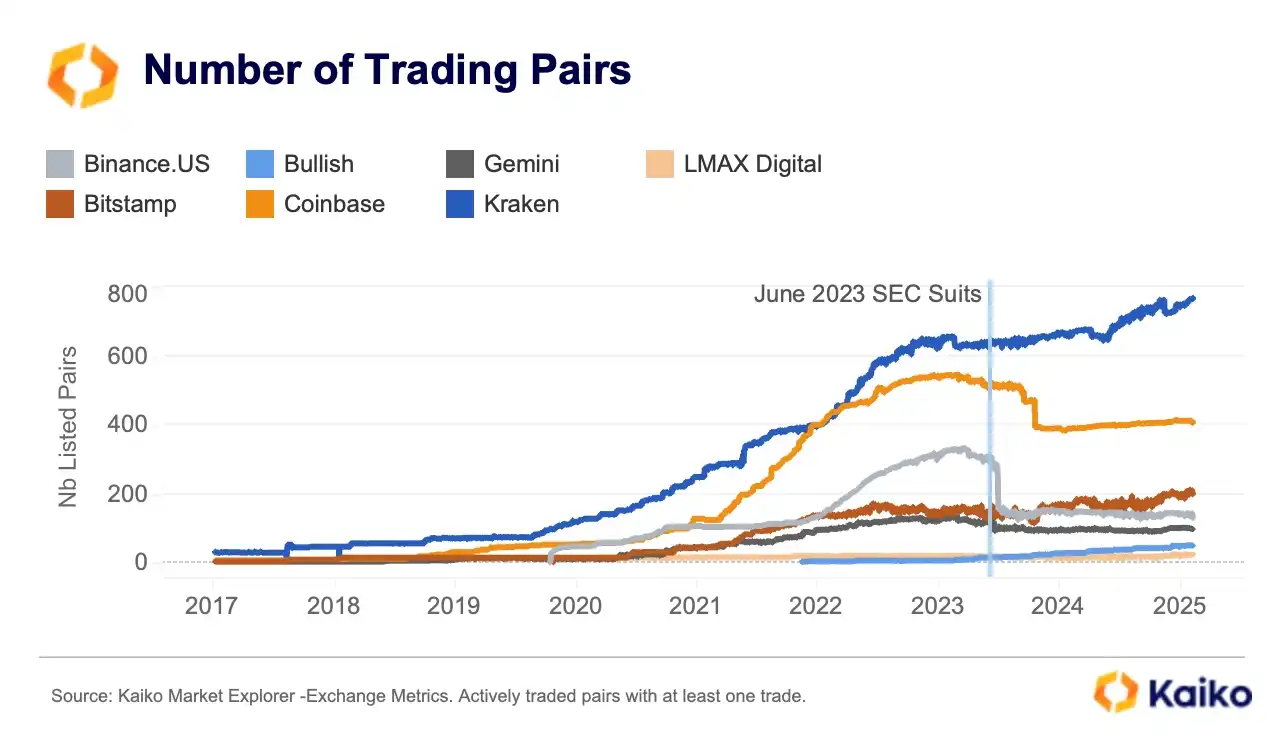
Furthermore, despite Coinbase continuously expanding its product offerings and benefiting more from cross-product synergies, the listing activity of new assets has significantly slowed down due to the influence of the strict U.S. regulatory environment.
The graph below shows that since the SEC filed lawsuits against Binance.US and Coinbase in June 2023, the number of active trading pairs on both platforms has seen a significant decline. However, if the regulatory environment improves in the future, Coinbase may accelerate its listing pace again, which could also enhance its attractiveness to retail traders.
Data Points
USDC Trading Volume Hits All-Time High: Binance Leads
Binance has now become the world's largest USDC trading market, with a weekly trading volume of $24 billion in January 2025, accounting for 49% of the global USDC total trading volume. This is the highest market share since September 2022. This significant growth is attributed to Binance's strategic partnership with Circle at the end of 2024, aimed at promoting wider adoption of USDC.
In contrast, Bybit's market share has significantly decreased, dropping from 38% in October 2023 to the current 8%.
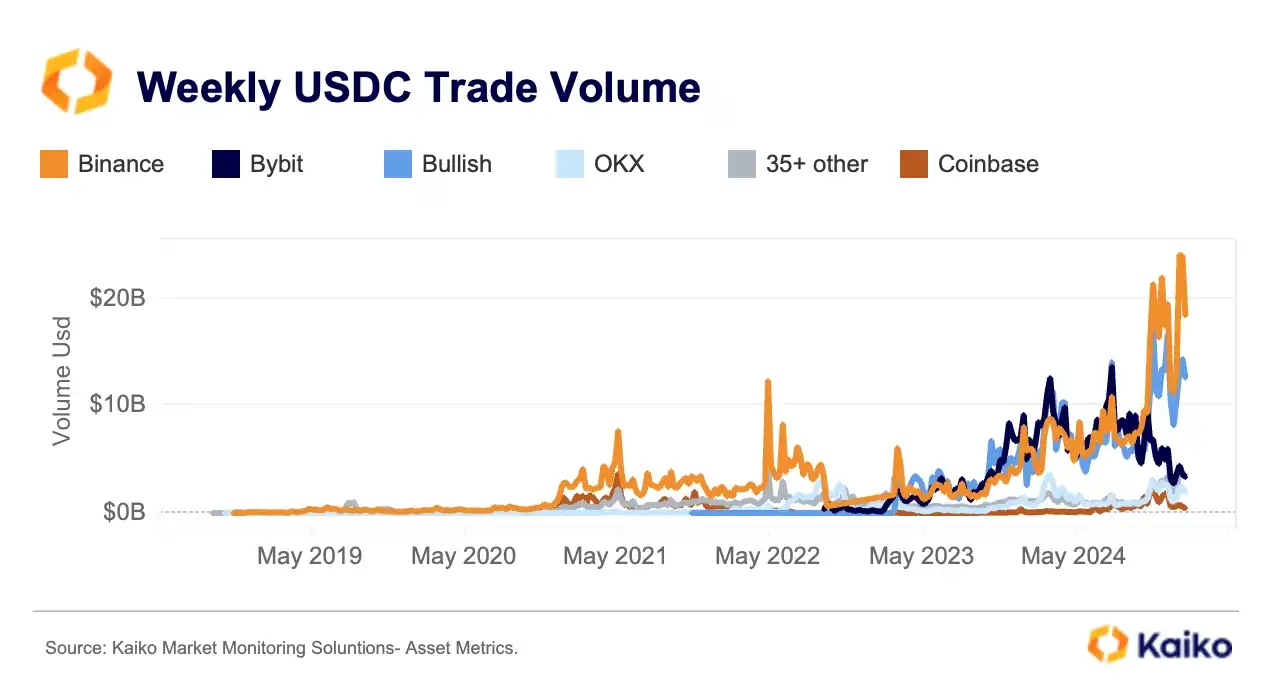
At the same time, the Bullish platform has rapidly emerged as one of Binance's key competitors, holding a 32% market share.
This shift in market dynamics is also reflected in the intensifying competition among stablecoins. Data shows that the proportion of newly listed USDT quoted trading pairs has decreased from 77% in 2023 to below 63% in 2024, and as of 2025, this proportion has further dropped to 50%.
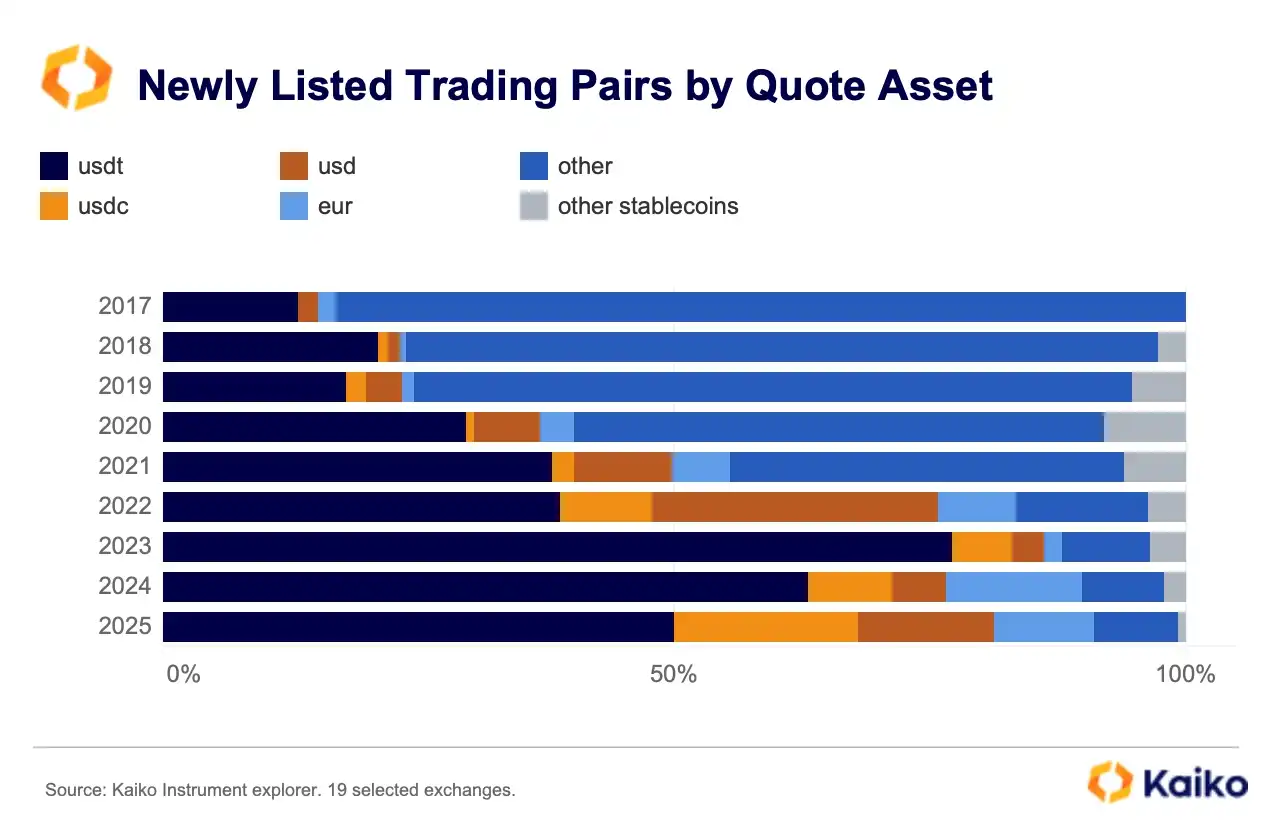
It is worth noting that euro-denominated trading pairs are gradually gaining market attention. This may indicate that the European market is experiencing a revival following the implementation of the MiCA regulation in 2024. For a more detailed analysis of euro market trends, please refer to our latest research report.
Shanzhai Liquidity: The Rise of Centralization Trend and Small Tokens
Since the U.S. election, the market's outlook and sentiment toward meme coins have significantly improved. This positive sentiment has driven a large number of new meme coin ETF applications and has also led to a surge in trading activity.
Data shows that the daily liquidity metric for meme coins (measured by the 1% market depth of the top 50 tokens) has nearly doubled since September 2023, reaching $9.6 billion.
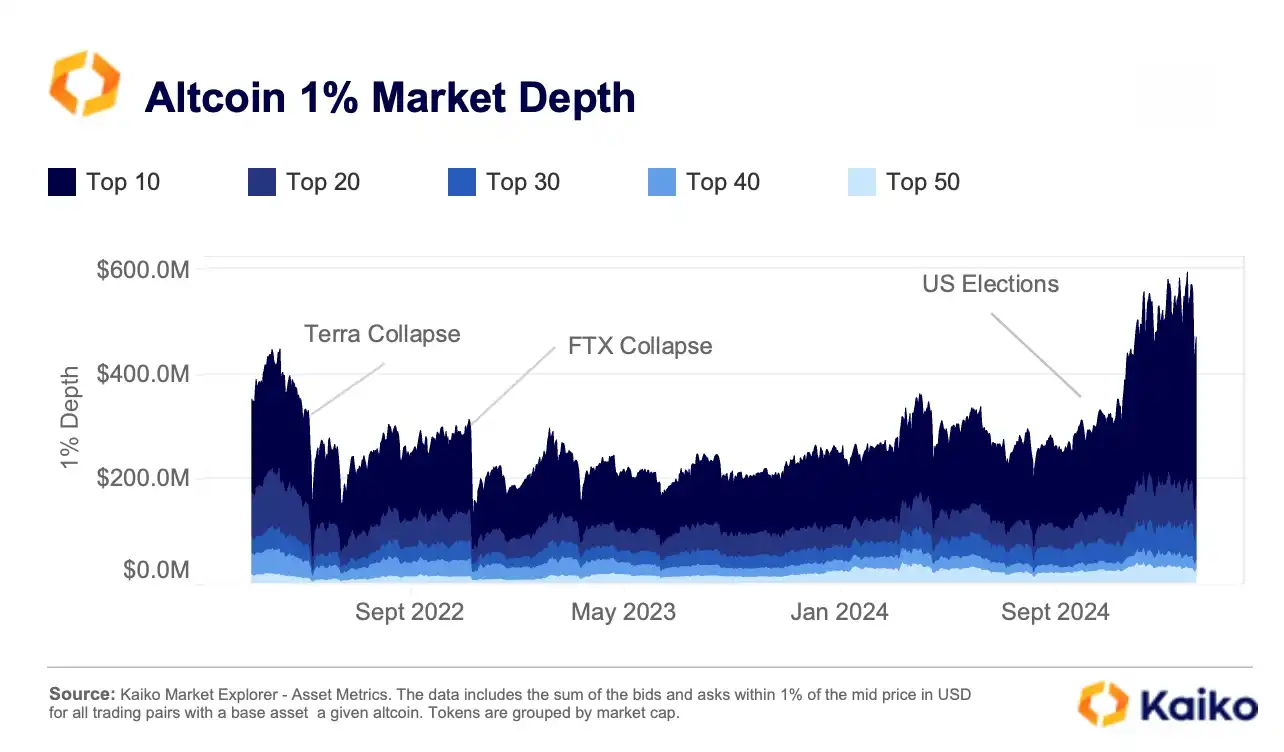
However, liquidity distribution is not uniform, still highly concentrated in the top 10 memes, which account for 64% of the total market depth. In contrast, mid-cap tokens (ranked 20–30) have seen a decrease in liquidity share, while small-cap tokens (ranked 50) have shown unexpectedly strong growth, with their liquidity share even surpassing the higher-cap group (ranked 40).
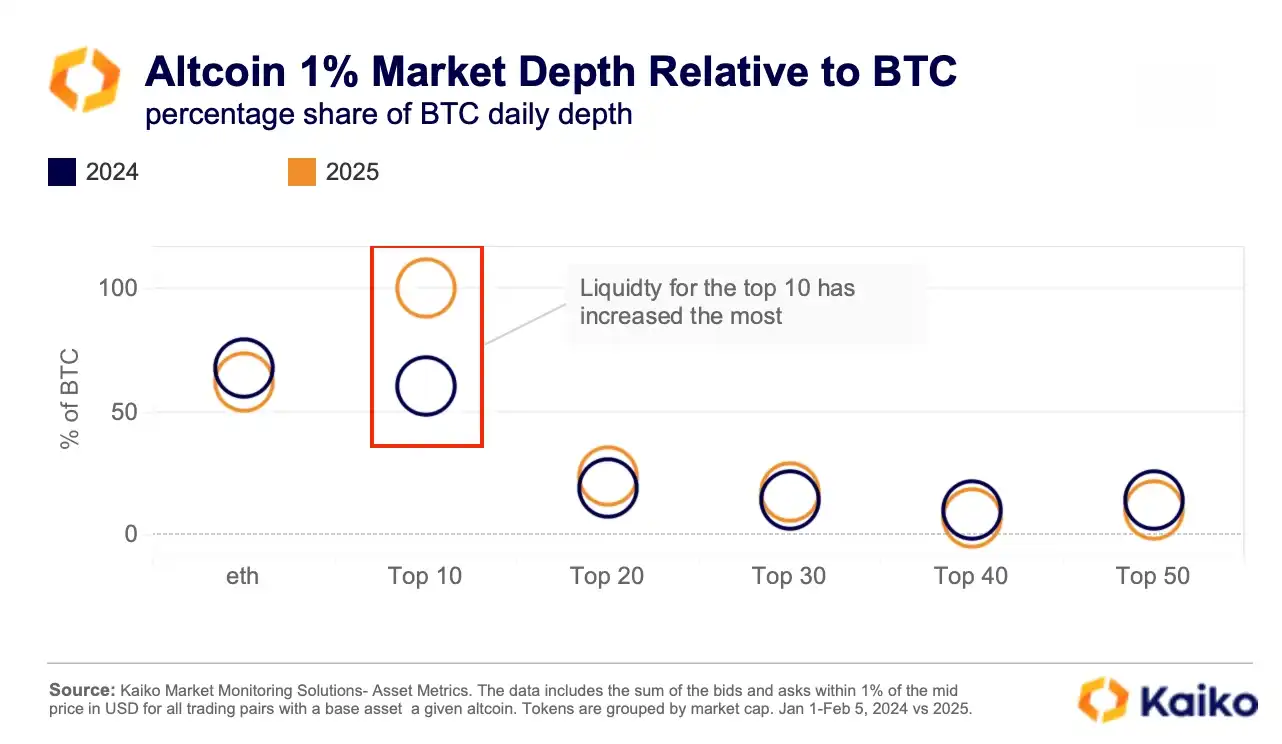
Nevertheless, market liquidity remains highly concentrated, with the top 10 meme coins occupying 64% of the total market depth. In comparison, mid-cap tokens (ranked 20–30) have seen a decrease in market share, while small-cap tokens (ranked in the top 50) have unexpectedly experienced growth, with their liquidity share even surpassing tokens with higher market caps (ranked in the top 40).
You may also like

Sahara AI Responds to SAHARA’s Sharp Drop: No Contract or Product Security Issues Found, Internal Investigation Underway
Sahara AI responded to SAHARA’s 60% price drop, saying no token contract or product security issues have been found and an internal investigation is underway.

WEEX Deposit/Withdrawal Dynamic Island: Your Asset Status, Always in Sight

Scaling Crypto Derivatives: The Digital Asset Infrastructure Behind High-Volume Trading
In the fast-moving digital asset ecosystem, derivatives platforms face an extreme architectural test. High-leverage futures markets demand more than just standard security—they require absolute operational precision, zero-latency matching engines, and ironclad structural scalability, all while navigating intense market volatility.
As global platforms scale to meet these demands, the industry is shifting away from rigid, monolithic setups toward a more agile, "decoupled" infrastructure philosophy.
The Blueprint for High-Volume Copy TradingFor elite global exchanges like WEEX (founded in 2018), this architectural choice becomes critical when scaling high-volume retail features like social copy trading. When thousands of users automatically mirror the real-time strategies of elite traders simultaneously, it triggers sudden, monumental spikes in concurrent transactional volume.
To prevent execution latency or settlement bottlenecks during these peak volatility events, a platform's primary engine must remain entirely dedicated to risk management, copy-trade synchronization, and order matching.
The Architectural Rule: New-generation platforms must separate front-end user execution engines from heavy backend infrastructural overhead to eliminate operational friction.
By separating these layers, platforms can maintain complete sovereignty over their trading environments and user experiences while strategically aligning with institutional-grade infrastructure ecosystems. This strategic framework allows modern exchanges to leverage advanced Digital Asset Custody infrastructure such as Cobo’s behind the scenes, ensuring that backend wallet management scales elastically alongside trading spikes.
Capitalizing on Market Momentum and 400× LeverageIn a derivatives arena where platforms offer up to 400× leverage on perpetual contracts, capital efficiency and market agility are core business metrics. To capture market momentum, an exchange needs the ability to rapidly expand its asset offerings, supporting everything from legacy crypto assets to sudden, trending altcoins across a massive library of trading pairs.
Adopting a flexible, scalable Wallet-as-a-Service (WaaS) solution such as Cobo’s could completely rewrite the development timeline for high-growth exchanges. Instead of spending months of engineering capital building out custom backend wallet architectures for every new blockchain network, platforms can deploy localized infrastructure in days.
This agility allows platforms to instantly scale their listings to over a thousand trading pairs without compromising security or delaying time-to-market. It mirrors the exact operational advantages seen during high-velocity market events, similar to how advanced wallet infrastructure empowers platforms during sudden asset surges; allowing exchanges to pass that speed and liquidity directly to their global user base.
A Mature Foundation for GrowthThe synergy between trusted infrastructure ecosystems and global trading platforms represents the natural evolution of a maturing crypto market. As WEEX continues to scale its global spot and derivatives offerings for over 6 million users, adopting robust backend paradigms proves that platforms no longer have to compromise between cutting-edge trading velocity and uncompromised structural security.

Morning Report | BitMine increased its holdings by 126,971 ETH last week; trader Eugene announced his exit from the crypto market

Wang Chuan: How can one not feel anxious after the neighbor Old Wang made thirty times profit by investing in storage stocks? (Seven) - A quarter-century cycle

Get Paid to Onboard? Try WEEX’s New Homepage with Rewards for Registration, Deposit & Trade

WEEX Custom Layout: Build Your Perfect Trading Workspace in Seconds

See “Buy Walls” & “Sell Walls” Instantly: WEEX Launches the Depth Chart for Smarter Trades

What Is Quick Trade on WEEX? 2 Ways WEEX Ends Chart-Panel Jumping
Morning News | Five major virtual asset platforms in South Korea have experienced 57 incidents of hacking and system failures in six years; Grayscale submits registration application for Canton ETF

Should we escape the peak? The principle of the tail-end market in the stock market

RootData: May 2026 Cryptocurrency Exchange Transparency Research Report

Founder of Baixing.com: My Experience with Claude Code in Fourteen Points

Yang Ge Gary: Agent Economics and AI Microeconomics
When reasoning becomes a scarce resource, who captures its value?

Jensen Huang dramatically "rescues" the South Korean stock market

Stablecoins vs Deposit Tokens: On the surface, they seem like opposing sides, but in reality, they are interconnected

Bitcoin Crash to $50,000 or Bear Trap Before $100,000? Deep Dive for WEEX Traders
Sahara AI Responds to SAHARA’s Sharp Drop: No Contract or Product Security Issues Found, Internal Investigation Underway
Sahara AI responded to SAHARA’s 60% price drop, saying no token contract or product security issues have been found and an internal investigation is underway.
WEEX Deposit/Withdrawal Dynamic Island: Your Asset Status, Always in Sight
Scaling Crypto Derivatives: The Digital Asset Infrastructure Behind High-Volume Trading
In the fast-moving digital asset ecosystem, derivatives platforms face an extreme architectural test. High-leverage futures markets demand more than just standard security—they require absolute operational precision, zero-latency matching engines, and ironclad structural scalability, all while navigating intense market volatility.
As global platforms scale to meet these demands, the industry is shifting away from rigid, monolithic setups toward a more agile, "decoupled" infrastructure philosophy.
The Blueprint for High-Volume Copy TradingFor elite global exchanges like WEEX (founded in 2018), this architectural choice becomes critical when scaling high-volume retail features like social copy trading. When thousands of users automatically mirror the real-time strategies of elite traders simultaneously, it triggers sudden, monumental spikes in concurrent transactional volume.
To prevent execution latency or settlement bottlenecks during these peak volatility events, a platform's primary engine must remain entirely dedicated to risk management, copy-trade synchronization, and order matching.
The Architectural Rule: New-generation platforms must separate front-end user execution engines from heavy backend infrastructural overhead to eliminate operational friction.
By separating these layers, platforms can maintain complete sovereignty over their trading environments and user experiences while strategically aligning with institutional-grade infrastructure ecosystems. This strategic framework allows modern exchanges to leverage advanced Digital Asset Custody infrastructure such as Cobo’s behind the scenes, ensuring that backend wallet management scales elastically alongside trading spikes.
Capitalizing on Market Momentum and 400× LeverageIn a derivatives arena where platforms offer up to 400× leverage on perpetual contracts, capital efficiency and market agility are core business metrics. To capture market momentum, an exchange needs the ability to rapidly expand its asset offerings, supporting everything from legacy crypto assets to sudden, trending altcoins across a massive library of trading pairs.
Adopting a flexible, scalable Wallet-as-a-Service (WaaS) solution such as Cobo’s could completely rewrite the development timeline for high-growth exchanges. Instead of spending months of engineering capital building out custom backend wallet architectures for every new blockchain network, platforms can deploy localized infrastructure in days.
This agility allows platforms to instantly scale their listings to over a thousand trading pairs without compromising security or delaying time-to-market. It mirrors the exact operational advantages seen during high-velocity market events, similar to how advanced wallet infrastructure empowers platforms during sudden asset surges; allowing exchanges to pass that speed and liquidity directly to their global user base.
A Mature Foundation for GrowthThe synergy between trusted infrastructure ecosystems and global trading platforms represents the natural evolution of a maturing crypto market. As WEEX continues to scale its global spot and derivatives offerings for over 6 million users, adopting robust backend paradigms proves that platforms no longer have to compromise between cutting-edge trading velocity and uncompromised structural security.
Morning Report | BitMine increased its holdings by 126,971 ETH last week; trader Eugene announced his exit from the crypto market
Wang Chuan: How can one not feel anxious after the neighbor Old Wang made thirty times profit by investing in storage stocks? (Seven) - A quarter-century cycle
Get Paid to Onboard? Try WEEX’s New Homepage with Rewards for Registration, Deposit & Trade


