
Risk Warning: Examining the 'Politicization' Scam of Cryptocurrencies Through LIBRA

Original Title: "Risk Alert | Understanding the 'Politicized' Cryptocurrency Scam through LIBRA"
Original Source: SlowMist Security Team
Background
In recent years, an increasing number of politicians have ventured into the cryptocurrency field, issuing digital currencies under the guise of "national economic revitalization" or "innovation," among other pretexts, in an attempt to endorse tokens through the "celebrity effect" and promote the popularization of cryptocurrency. Although these tokens claim to be driving economic reform and technological innovation, they often conceal significant risks, becoming a "wealth trap" for speculators and ordinary investors. From TRUMP launched by the Trump family to the recently controversial LIBRA, these politicized cryptocurrencies have undoubtedly become the focus of the market. However, at the same time, they have also brought about significant security risks and the potential for a financial crisis.
As a company focused on blockchain security, we will use LIBRA as an example to reveal the potential risks of these politicized cryptocurrency projects and provide users with clearer security alerts.
The “Politicized” Cryptocurrency — LIBRA
On February 15, Argentine President Milei launched a Memecoin named LIBRA, claiming that this would help promote the revival of the Argentine economy and publicly released the related contract address. After the announcement, numerous Memecoin enthusiasts rushed to participate in the project, causing LIBRA's price to skyrocket rapidly, with a market cap peaking at nearly $5 billion. However, just hours after the token was launched, the project team withdrew liquidity, causing the market cap to plummet rapidly to $590 million, resulting in significant losses for investors. Following the incident, Milei deleted the relevant promotional tweets, claiming to be unaware of the specific details of the LIBRA project, and announced the initiation of an anti-corruption investigation. As the situation unfolded, not only did lawyers file a lawsuit against Milei for alleged fraud, but it also sparked calls from the political opposition for impeachment proceedings against him.
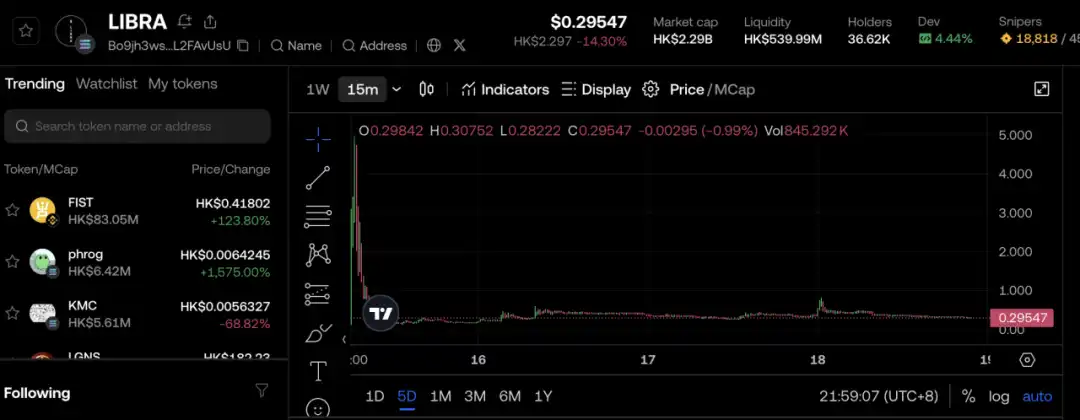
According to the analysis by the on-chain anti-money laundering and tracking tool MistTrack, eight wallets associated with the LIBRA team have currently profited over $100 million, detailed as follows:
Address 1 - DefcyKc4yAjRsCLZjdxWuSUzVohXtLna9g22y3pBCm2z
On 2025-02-14 21:36:54 (UTC), this address withdrew 10.89 SOL from FixedFloat as initial capital and had previously withdrawn SOL from Kraken:
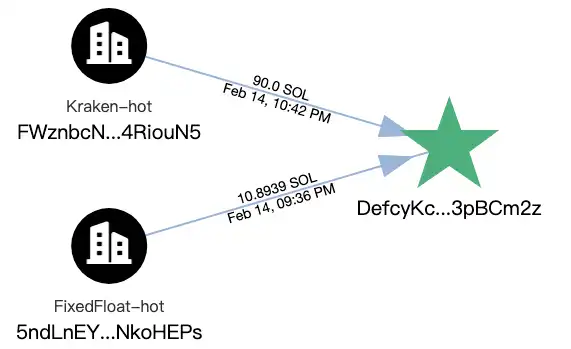
2025-02-14 21:37:49 to 2025-02-14 21:38:02 (UTC), create a new SPL Token, named LIBRA (Bo9jh3wsmcC2AjakLWzNmKJ3SgtZmXEcSaW7L2FAvUsU), then Mint 1 Billion SPL Tokens:

2025-02-14 21:38:48 (UTC), in the same transaction, transfer 200 million LIBRA to the address Gj9esbWVNJyy55SDJzYudMAznewqmW3Xb6GpUakcCNwT, with no further movement; transfer 500 million LIBRA to the address FdWhTThthSN7mbcmBgh18dzogi1dXqQqBb6BnnzZEJJn, ultimately ending up at address 42rex5yRsP1mdAKHzB5avDzagT6mqB5uYPergUFZ2Tgn.

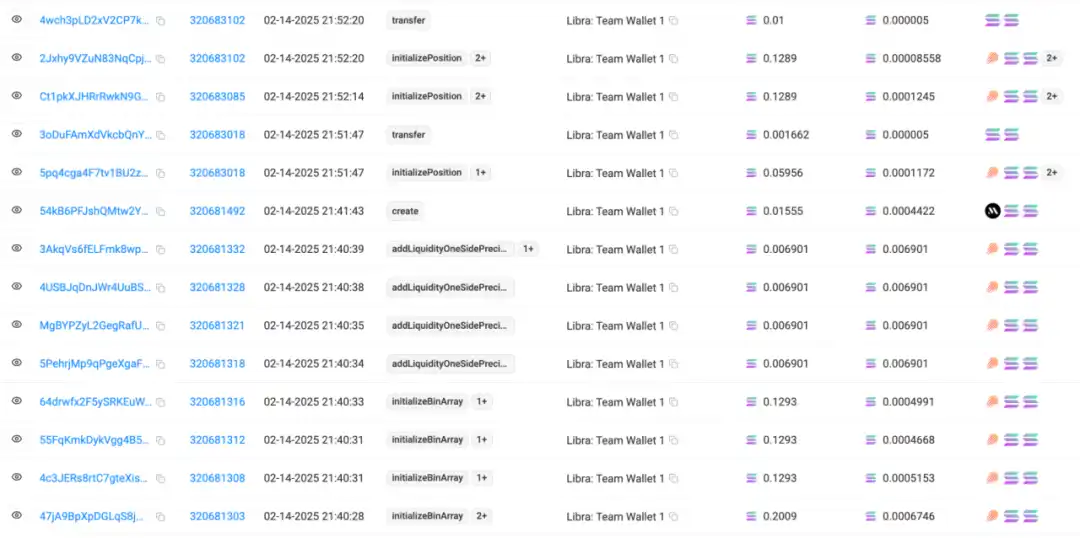
2025-02-14 21:40:24 to 2025-02-14 21:52:20 (UTC), create DLMM Config and Token Metadata:
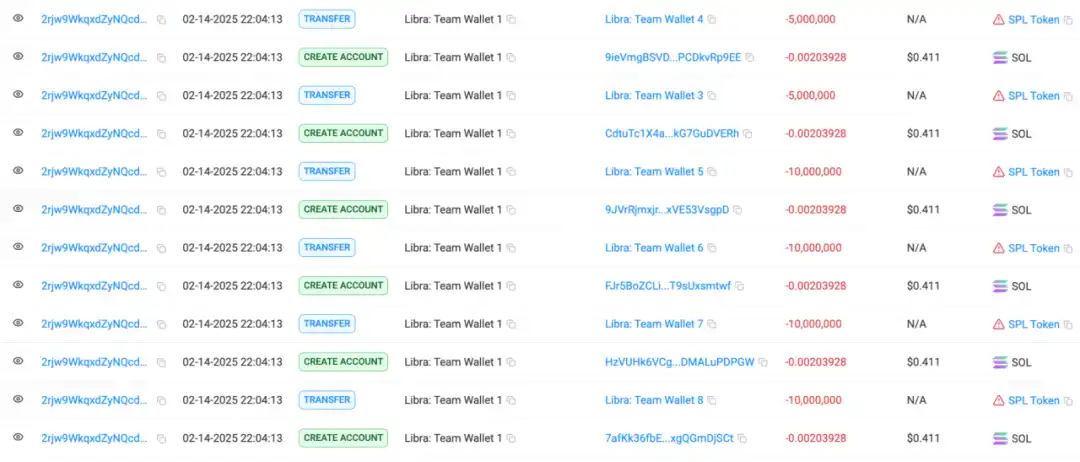
22:01, publish a tweet. 22:04, create relevant accounts and transfer LIBRA:
Profit address 1 profits approximately 13.06 million USDC via claimFee, not yet withdrawn:
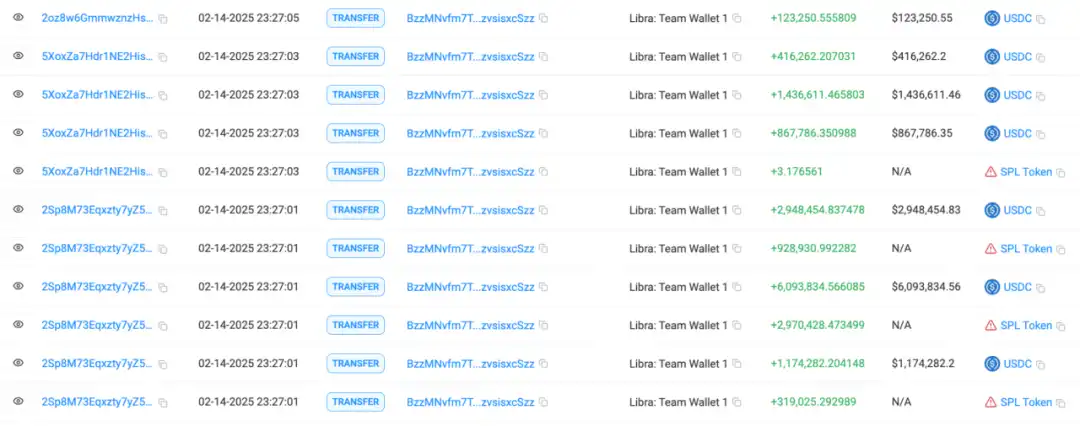
In addition, profit address 1 also transferred 650,000 LIBRA to address 3apupKwTisjy4Wx1zVndXVegmxtR9majPEgHatBRZ1LF at 22:30:34, the beneficial owner of this address is currently unknown.
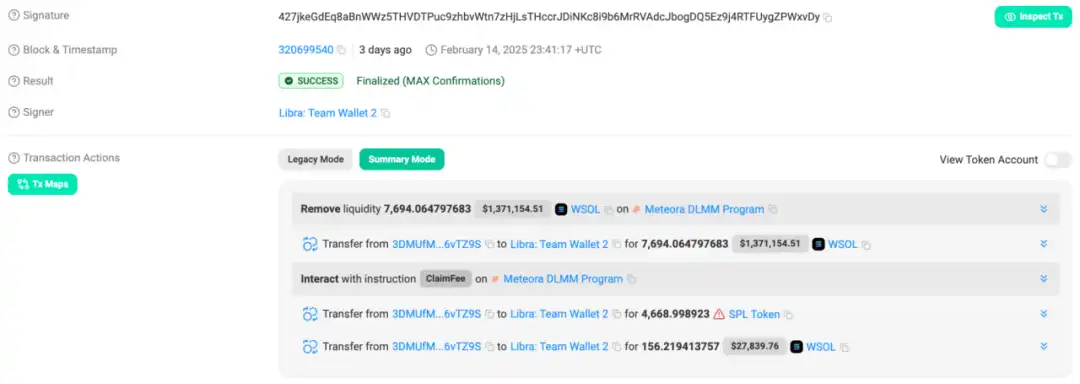
Address 2 - 2QmyirshoyT2ApsQU8bXdeGa2vTsNp1rxEzv4qhzTwyh
Profit approximately 32,052 SOL in address 2, not yet withdrawn, valued at approximately 6.4 million USD:
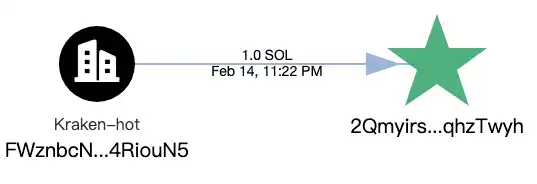
The address previously withdrew SOL from Kraken:
Address 3 - BXoCWWijZiVQFXNRqcZAiHQroYkaUnjkRznnZrt9gj42
Profited approximately 148,343 SOL, worth around $28.84 million:
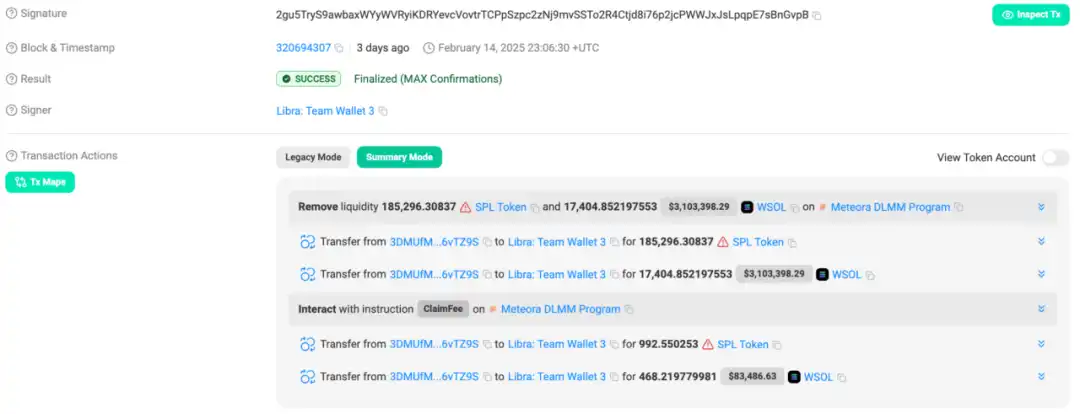
The address transferred 148,343 SOL to address B9KTwxhc9e6qrjw5nfmhgcN38oKFTBtnef8AwaTPVQ6q, which has not been withdrawn yet.
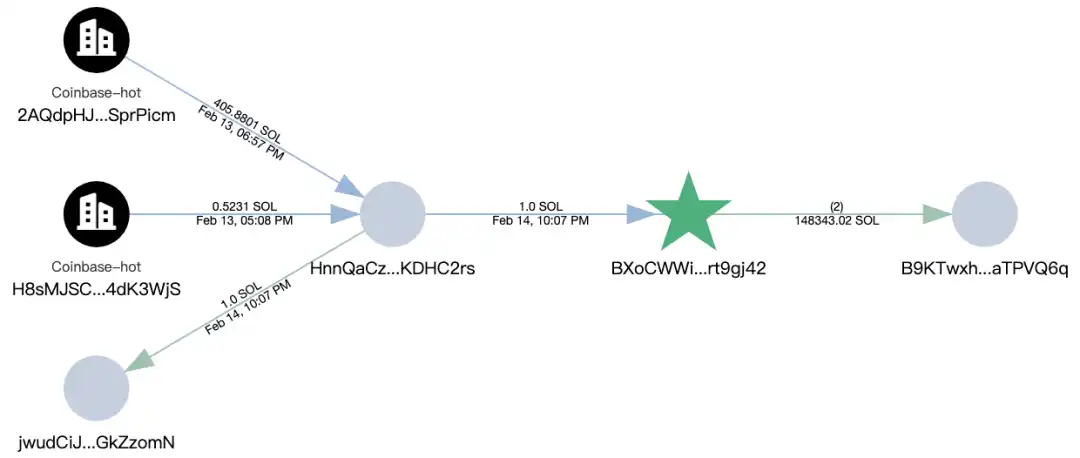
Furthermore, the initial funds of this address came from 1 SOL transferred from address HnnQaCzoFBSkT1xgksM6biyAZSyZgiorYsE6ZKDHC2rs, and address HnnQ also transferred 1 SOL to profit address 4, with address HnnQ's initial funds coming from Coinbase.
Address 4 - jwudCiJ5QUUmfxPXN41jaqYKnSc3UmKo5RoRGkZzomN
Profited approximately 69,276 SOL, worth around $13.47 million:

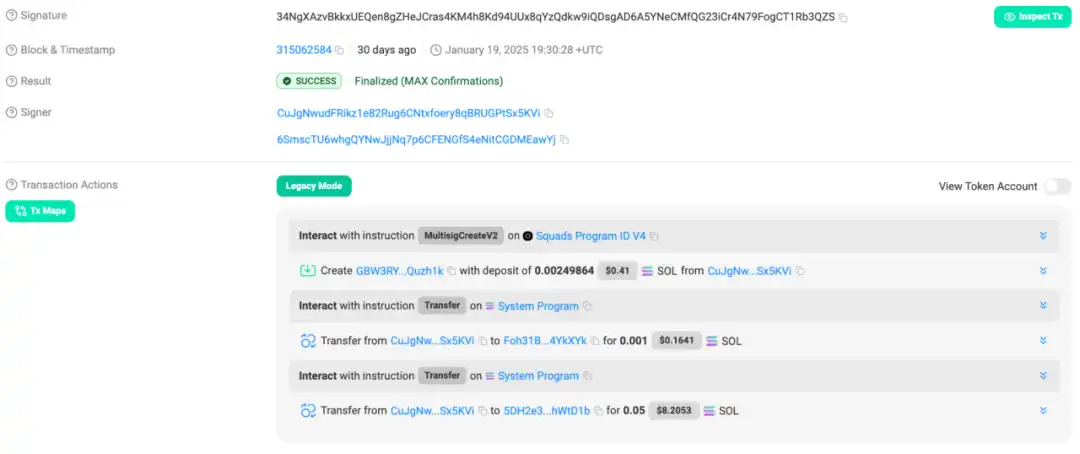
The address transferred 69,276 SOL to address FTjLYkNARZHnqekpKj5mHzbJx7EqW1fSr15Ec4oijBUQ, which has not been withdrawn yet. The initial funds of address FTjL came from 0.14 SOL transferred from address CuJgNwudFRikz1e82Rug6CNtxfoery8qBRUGPtSx5KVi.

It is worth noting that the initial funds of address CuJgNwudFRikz1e82Rug6CNtxfoery8qBRUGPtSx5KVi came from Bybit, and this address provided funding for the deployment of Melania, a Memecoin launched by Melania Trump, the former First Lady of the United States.
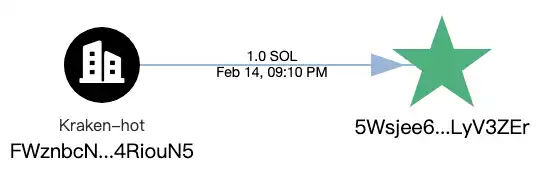
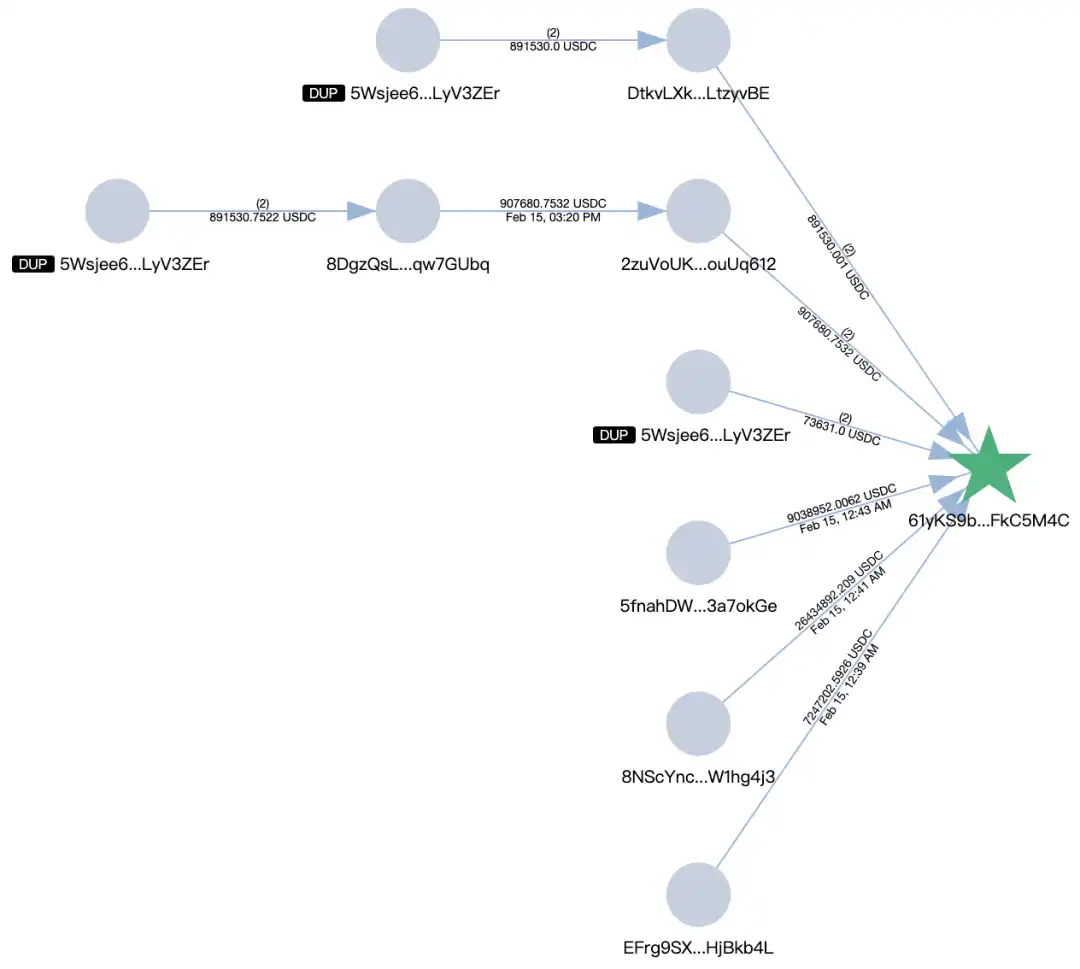
Address 5 - 5Wsjee6FgZQtxjUBedfNq9ZbV6RN7wgb4N422LyV3ZEr
Profit of approximately 1.85 million USDC:
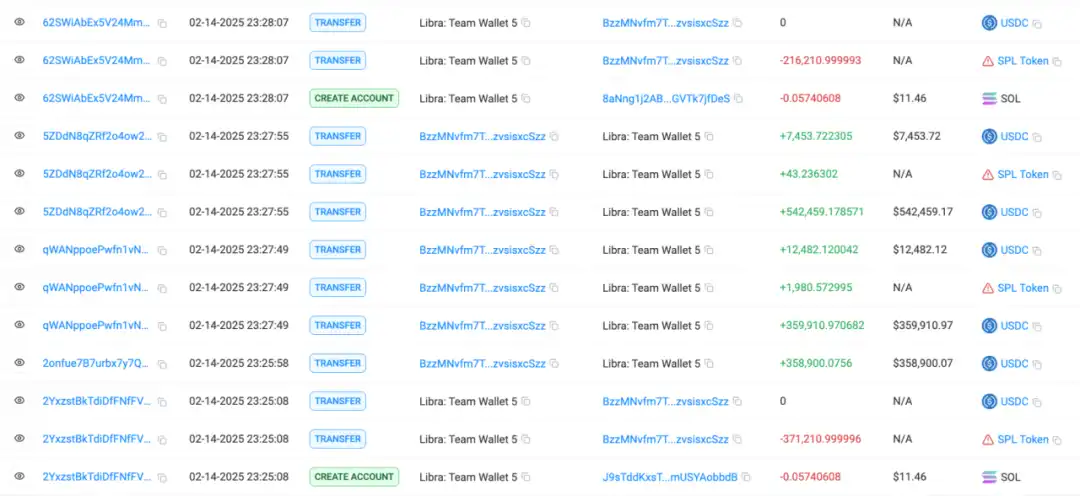
The address previously withdrew SOL from Kraken:
After multiple transfers, the USDC ultimately remained in address 61yKS9bjxWdqNgAHt439DfoNfwK3uKPAJGWAsFkC5M4C. Furthermore, we found that other sources of USDC in address 61yK were transferred from profit addresses 6, 7, 8, with a current total balance of 44.59 million USDC.
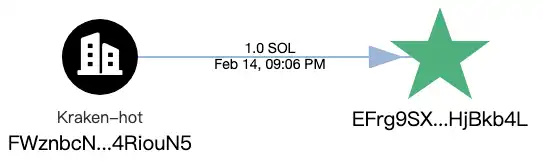
Address 6 - EFrg9SXbnCfuVqJPJf2hKKY3CtTPLHvipEpgrHjBkb4L
Profit of approximately 7.25 million USDC, transferred to address 61yKS9bjxWdqNgAHt439DfoNfwK3uKPAJGWAsFkC5M4C, and address 6's SOL came from Kraken:
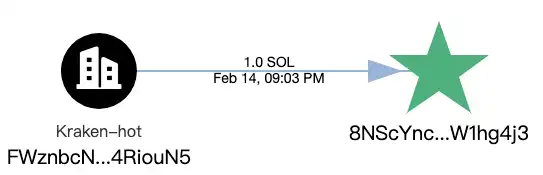
Address 7 - 8NScYncjpY1mKrbxVJFFdVqNPEocyXTnQqy9GW1hg4j3
Profit of approximately 26.43 million USDC, transferred to address 61yKS9bjxWdqNgAHt439DfoNfwK3uKPAJGWAsFkC5M4C, and address 7's SOL came from Kraken:
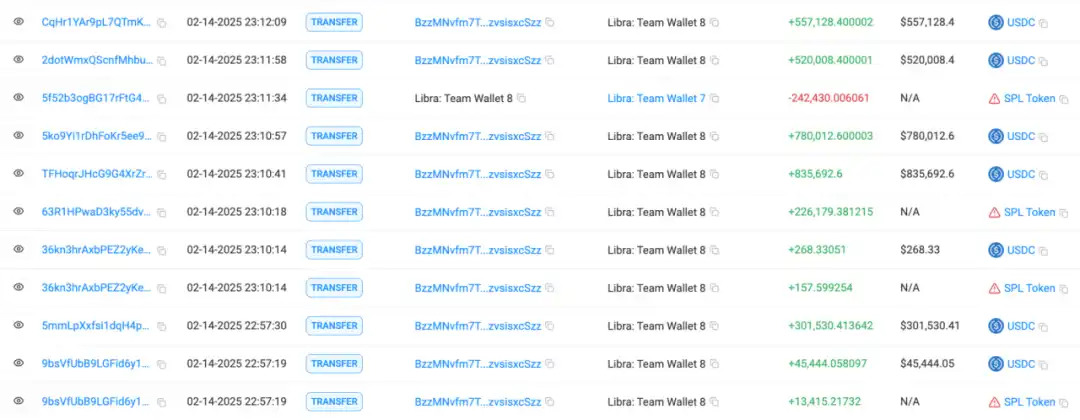
Address 8 - 5fnahDWBtUB8QBTXWHm2QzfAoAVHToxvMf38i3a7okGe
Profit of approximately 9 million USDC, transferred to address 61yKS9bjxWdqNgAHt439DfoNfwK3uKPAJGWAsFkC5M4C, and address 8's SOL came from Kraken:
As a newly launched project, LIBRA has not undergone a market audit, lacks a public technical whitepaper or compliance safeguards, and lacks value support. It is worth noting that some media outlets have pointed out controversial remarks in Milei's social media history, suggesting this behavior may be due to a hacked account. Furthermore, there have been allegations from users claiming that crypto influencer Threadguy admitted in a previous live stream that he was aware of LIBRA's token issuance information weeks in advance, potentially indicating another insider trading incident. This raises further questions about the legitimacy and security of this "token issuance operation." In addition, there have been rumors that a close associate of Milei accepted a $5 million bribe to push this token project in front of the president, facilitating the president's promotion of LIBRA. All these revelations further expose the possible manipulation and lack of transparency behind politicians launching tokens, highlighting the core issue of inadequate regulation behind the project.
The Risks Behind the Celebrity Effect
Milei is not the first politician to dabble in cryptocurrency. In January 2025, Trump also launched a Memecoin called TRUMP, which, solely based on his personal brand effect, successfully sparked a market frenzy. On the day of its launch, $TRUMP's market value skyrocketed by 1250%, with a trading volume exceeding 5 billion dollars.
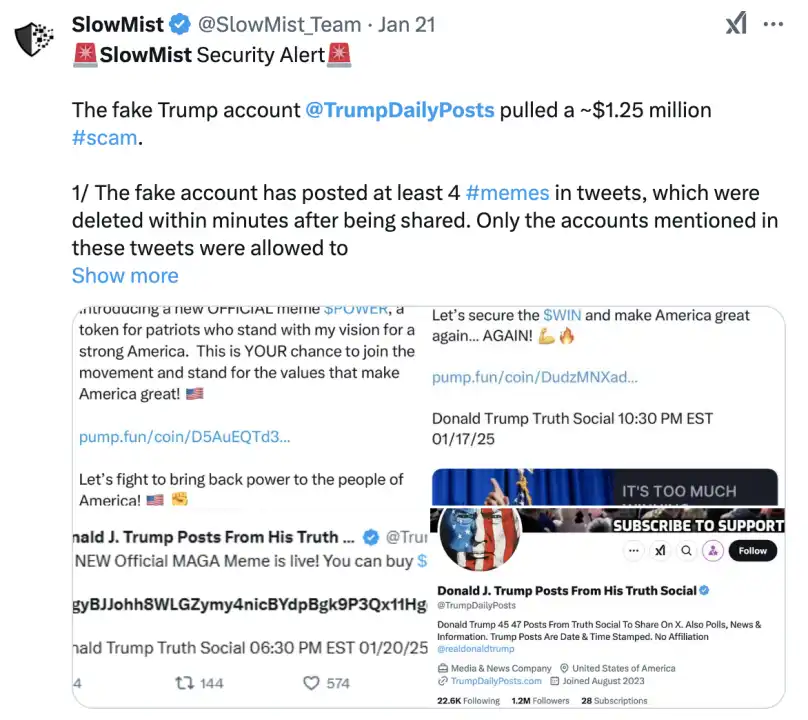
Users' FOMO sentiment towards $TRUMP also led to new scams. An X account named @TrumpDailyPosts with over 1.6 million followers not only synchronizes Trump's posts on Truth Social to Twitter but also posts Trump-related news and other tweets. According to an analysis by the SlowMist Security Team, this account had posted at least 4 tweets about the Memecoin, all of which were deleted minutes after posting, and only the mentioned account was allowed to comment.
The Trump family's actions are not the first to cause controversy. As mentioned earlier, the token MELANIA launched by Trump's wife Melania led to a halving of the TRUMP price, causing MELANIA's market value to evaporate by 7.5 billion dollars in just 10 minutes, resulting in significant wealth losses for users. Although Trump and his family claim that these actions are "in support of cryptocurrency innovation," these tokens often lack underlying value support, relying on the core of celebrity effect hype, with the market lacking a true assessment of the project's value. Once the market hype fades, the token's value will rapidly collapse, causing significant losses to ordinary investors, appearing glamorous on the surface but hiding substantial risks.
Politicized cryptocurrency does not equate to economic innovation and is often merely a tool for shifting contradictions and attracting attention.
In February 2025, the President of the Central African Republic, Faustin-Archange Touadéra, launched a Memecoin called CAR, claiming that this move would drive national development through crypto assets. However, an investigation by the SlowMist Security Team found that CAR's official website was only registered for 4 days, with 80% of the tokens concentrated in 6 associated addresses, funded by Binance, lacking security audits and technical support.

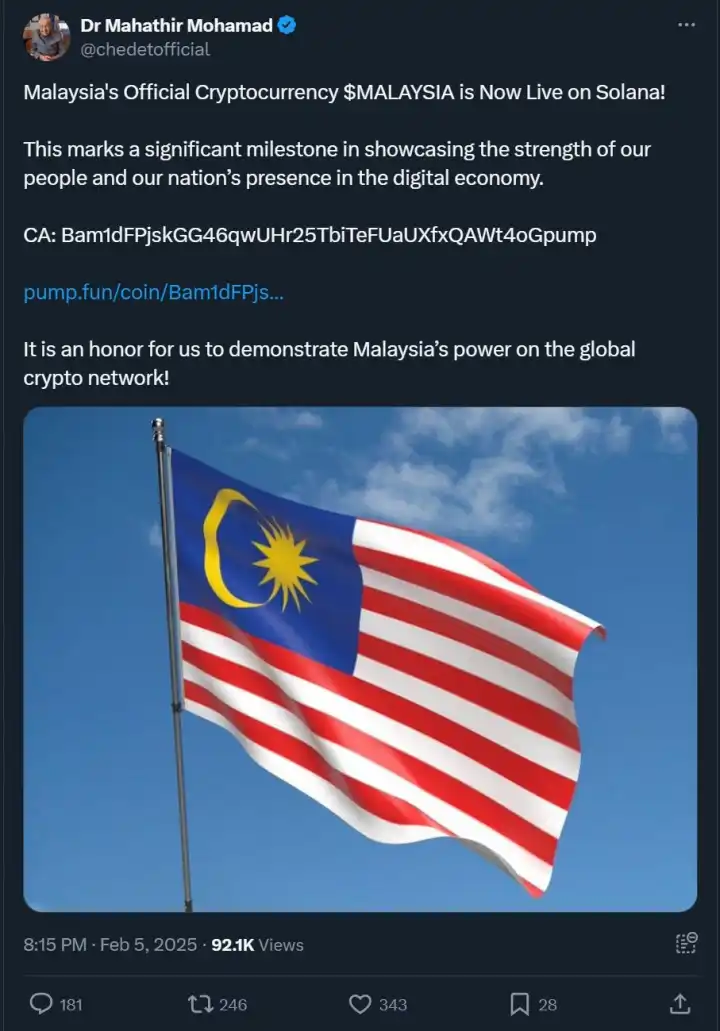
That same month, the social media account @chedetofficial of Malaysia's former Prime Minister also tweeted an announcement of the launch of $MALAYSIA, with the account suspected to have been hacked.
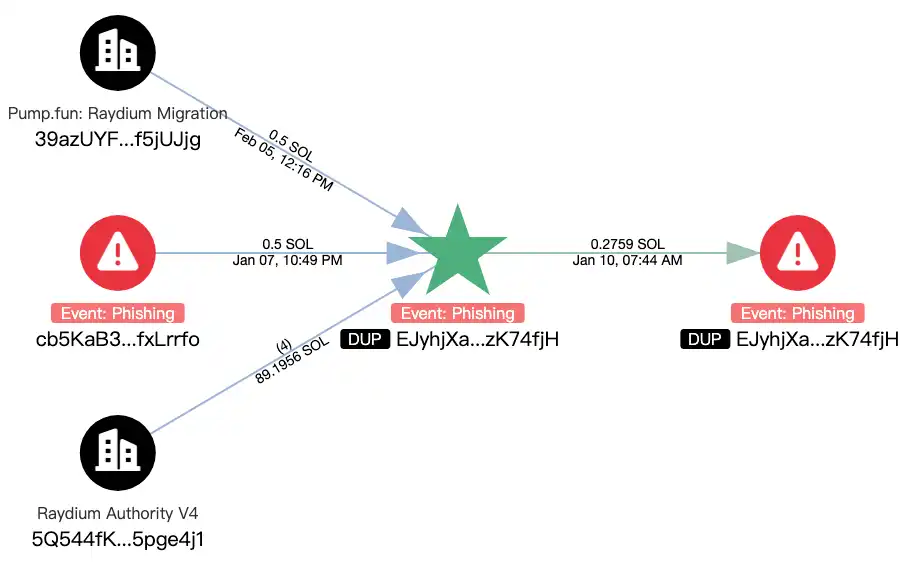
We identified through MistTrack that the creator of the smart contract address (CA) associated with this account has been linked to a historical malicious group.
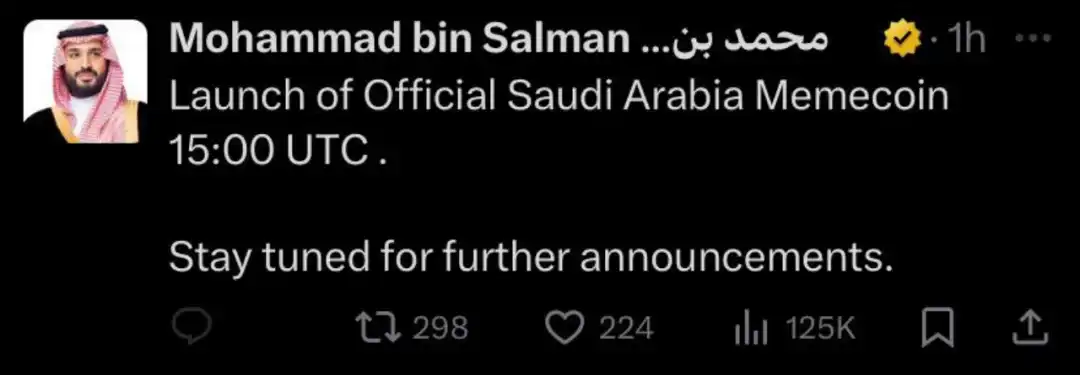
Fast forward to February 17, a fake X account claiming to be a Saudi Crown Prince official has been continuously posting tweets about Memecoin:
In addition to the above "coin launch" event, some politicians have also attempted to boost fiscal revenue through cryptocurrency mining farms, with Iran being one of them. The Iranian government had announced the legalization of domestic cryptocurrency mining farms to bring in more foreign exchange for the country. However, this move not only failed to effectively relieve Iran's economic pressure but also resulted in massive resource wastage and illegal power consumption due to a lack of proper regulation and policy safeguards, further diminishing the government's credibility in the international community.
Such tokens often experience an initial price surge through hype and fund manipulation, but when the market bubble bursts, investors are often left bearing the brunt of the losses. We have witnessed investors get liquidated within a very short period, suffering significant losses. This vicious cycle not only tarnishes the market image of cryptocurrency but also poses a significant threat to the wealth of ordinary investors.
Beware of Politicized Cryptocurrency Scams
The innovation of cryptocurrency should be built on a transparent and fair regulatory framework, rather than becoming a tool for politicians to exploit their personal influence and capital for hype. While the celebrity effect may attract a large number of investors in the short term, this hype often lacks underlying value, and these projects are usually unaudited, unregulated, and lacking reliable technical support. In such cases, investors blindly follow the trend, and once market sentiment reverses, token prices quickly collapse, leaving ordinary investors as the biggest victims.
We advise users to remain vigilant when dealing with such projects. It is essential to critically assess their authenticity and security from multiple perspectives, avoid blindly following trends, and preferably choose platforms that have undergone rigorous audits and compliance. To better protect their assets, users can utilize professional on-chain tracking tools such as MistTrack (https://misttrack.io/) to monitor and analyze their funds. MistTrack can assist users in real-time transaction tracking, fund flow analysis, thereby reducing the risk of encountering scams or Rug Pull events, and better safeguarding asset security.
You may also like

Cryptocurrency CEXs are flocking to sell US stocks, and traditional brokerages are facing an "uninvited guest."

Will the SpaceX IPO Hurt Bitcoin? Here's What Traders Are Watching
Foreign selling in the South Korean stock market accelerates, with cumulative net sales reportedly reaching $75 billion this year
On June 9, The Kobeissi Letter, citing Goldman Sachs data, reported that global investors are selling South Korean stocks at an unusually rapid pace. In the latest trading session, foreign investors sold about $801 million worth of Kospi constituent stocks again; total foreign outflows last week reached about $10 billion, and the market has been in net foreign selling on nearly every trading day over the past month. According to the data cited in the report, foreign investors have sold about $75 billion worth of South Korean stocks so far this year. Meanwhile, South Korean retail and institutional investors together recorded roughly $69 billion in net buying over the same period, suggesting that the market’s main buying support has come from domestic capital rather than returning overseas funds. The information currently disclosed still mainly comes from The Kobeissi Letter’s retelling and Goldman Sachs data summaries, while public details on the statistical period and the specific definition of “selling” remain relatively limited.

Fortune Warns of Strategy’s Financing Structure Risks as Bitcoin Premium Narrows
Fortune warned that Strategy’s Bitcoin treasury model faces growing financing risks as MSTR’s net asset premium narrows and preferred stock dividend pressure increases.

Ferrari Challenge Le Mans: Carl Moon to Dominate in WEEX Livery

Sahara AI Responds to SAHARA’s Sharp Drop: No Contract or Product Security Issues Found, Internal Investigation Underway
Sahara AI responded to SAHARA’s 60% price drop, saying no token contract or product security issues have been found and an internal investigation is underway.

WEEX Deposit/Withdrawal Dynamic Island: Your Asset Status, Always in Sight

Scaling Crypto Derivatives: The Digital Asset Infrastructure Behind High-Volume Trading
In the fast-moving digital asset ecosystem, derivatives platforms face an extreme architectural test. High-leverage futures markets demand more than just standard security—they require absolute operational precision, zero-latency matching engines, and ironclad structural scalability, all while navigating intense market volatility.
As global platforms scale to meet these demands, the industry is shifting away from rigid, monolithic setups toward a more agile, "decoupled" infrastructure philosophy.
The Blueprint for High-Volume Copy TradingFor elite global exchanges like WEEX (founded in 2018), this architectural choice becomes critical when scaling high-volume retail features like social copy trading. When thousands of users automatically mirror the real-time strategies of elite traders simultaneously, it triggers sudden, monumental spikes in concurrent transactional volume.
To prevent execution latency or settlement bottlenecks during these peak volatility events, a platform's primary engine must remain entirely dedicated to risk management, copy-trade synchronization, and order matching.
The Architectural Rule: New-generation platforms must separate front-end user execution engines from heavy backend infrastructural overhead to eliminate operational friction.
By separating these layers, platforms can maintain complete sovereignty over their trading environments and user experiences while strategically aligning with institutional-grade infrastructure ecosystems. This strategic framework allows modern exchanges to leverage advanced Digital Asset Custody infrastructure such as Cobo’s behind the scenes, ensuring that backend wallet management scales elastically alongside trading spikes.
Capitalizing on Market Momentum and 400× LeverageIn a derivatives arena where platforms offer up to 400× leverage on perpetual contracts, capital efficiency and market agility are core business metrics. To capture market momentum, an exchange needs the ability to rapidly expand its asset offerings, supporting everything from legacy crypto assets to sudden, trending altcoins across a massive library of trading pairs.
Adopting a flexible, scalable Wallet-as-a-Service (WaaS) solution such as Cobo’s could completely rewrite the development timeline for high-growth exchanges. Instead of spending months of engineering capital building out custom backend wallet architectures for every new blockchain network, platforms can deploy localized infrastructure in days.
This agility allows platforms to instantly scale their listings to over a thousand trading pairs without compromising security or delaying time-to-market. It mirrors the exact operational advantages seen during high-velocity market events, similar to how advanced wallet infrastructure empowers platforms during sudden asset surges; allowing exchanges to pass that speed and liquidity directly to their global user base.
A Mature Foundation for GrowthThe synergy between trusted infrastructure ecosystems and global trading platforms represents the natural evolution of a maturing crypto market. As WEEX continues to scale its global spot and derivatives offerings for over 6 million users, adopting robust backend paradigms proves that platforms no longer have to compromise between cutting-edge trading velocity and uncompromised structural security.

Morning Report | BitMine increased its holdings by 126,971 ETH last week; trader Eugene announced his exit from the crypto market

Wang Chuan: How can one not feel anxious after the neighbor Old Wang made thirty times profit by investing in storage stocks? (Seven) - A quarter-century cycle

Get Paid to Onboard? Try WEEX’s New Homepage with Rewards for Registration, Deposit & Trade

WEEX Custom Layout: Build Your Perfect Trading Workspace in Seconds

See “Buy Walls” & “Sell Walls” Instantly: WEEX Launches the Depth Chart for Smarter Trades

What Is Quick Trade on WEEX? 2 Ways WEEX Ends Chart-Panel Jumping
Morning News | Five major virtual asset platforms in South Korea have experienced 57 incidents of hacking and system failures in six years; Grayscale submits registration application for Canton ETF

Should we escape the peak? The principle of the tail-end market in the stock market

RootData: May 2026 Cryptocurrency Exchange Transparency Research Report

Founder of Baixing.com: My Experience with Claude Code in Fourteen Points
Cryptocurrency CEXs are flocking to sell US stocks, and traditional brokerages are facing an "uninvited guest."
Will the SpaceX IPO Hurt Bitcoin? Here's What Traders Are Watching
Foreign selling in the South Korean stock market accelerates, with cumulative net sales reportedly reaching $75 billion this year
On June 9, The Kobeissi Letter, citing Goldman Sachs data, reported that global investors are selling South Korean stocks at an unusually rapid pace. In the latest trading session, foreign investors sold about $801 million worth of Kospi constituent stocks again; total foreign outflows last week reached about $10 billion, and the market has been in net foreign selling on nearly every trading day over the past month. According to the data cited in the report, foreign investors have sold about $75 billion worth of South Korean stocks so far this year. Meanwhile, South Korean retail and institutional investors together recorded roughly $69 billion in net buying over the same period, suggesting that the market’s main buying support has come from domestic capital rather than returning overseas funds. The information currently disclosed still mainly comes from The Kobeissi Letter’s retelling and Goldman Sachs data summaries, while public details on the statistical period and the specific definition of “selling” remain relatively limited.
Fortune Warns of Strategy’s Financing Structure Risks as Bitcoin Premium Narrows
Fortune warned that Strategy’s Bitcoin treasury model faces growing financing risks as MSTR’s net asset premium narrows and preferred stock dividend pressure increases.
Ferrari Challenge Le Mans: Carl Moon to Dominate in WEEX Livery
Sahara AI Responds to SAHARA’s Sharp Drop: No Contract or Product Security Issues Found, Internal Investigation Underway
Sahara AI responded to SAHARA’s 60% price drop, saying no token contract or product security issues have been found and an internal investigation is underway.


