
Sonic's Ultimate Playbook: How to Seize the DeFi Boom Opportunity?

Original Article Title: Hello World. Hello Sonic.
Original Article Author: Foxi_xyz, DeFi & AI Researcher
Original Article Translation: ChatGPT
Editor's Note: The author introduced Sonic's background, Tokenomics design, and how the DeFi flywheel operates, analyzed potential risks in the ecosystem, and explained in detail how to benefit from this mechanism. Through screening multiple projects in the Sonic ecosystem, the author recommended opportunities in areas such as DEX, lending, derivatives, and memes to help readers capture high-potential projects.
The following is the original content (slightly rearranged for clarity):
I have created the ultimate guide to Sonic for you, especially if you are not familiar with the DeFi flywheel. Andre Cronje promotes over 20 projects every day, so I have picked out good projects for you.
I got into crypto because of the 2020 DeFi summer, and I am glad AC and his chain are back. Like usual tutorials, this article will delve into Sonic's development. However, I first want to introduce the risks in the DeFi flywheel ecosystem. I am not responsible for your losses, but I aim to explain the mechanism behind the DeFi flywheel to newcomers. (If you only want to know about "CA," please skip to the fourth part.)
Flywheel = Ponzi Scheme? When to Exit Scam?
Many DeFi flywheels revolve around the mismatch between the timing of capital deployment and its recognition of true value—a phenomenon often summed up as "enter when nobody knows, exit when everybody knows."
Early liquidity injections build momentum, attract more participants, and create a self-reinforcing growth cycle. Essentially, early participants benefit from compounding rewards as liquidity accumulates, and the system gains recognition.
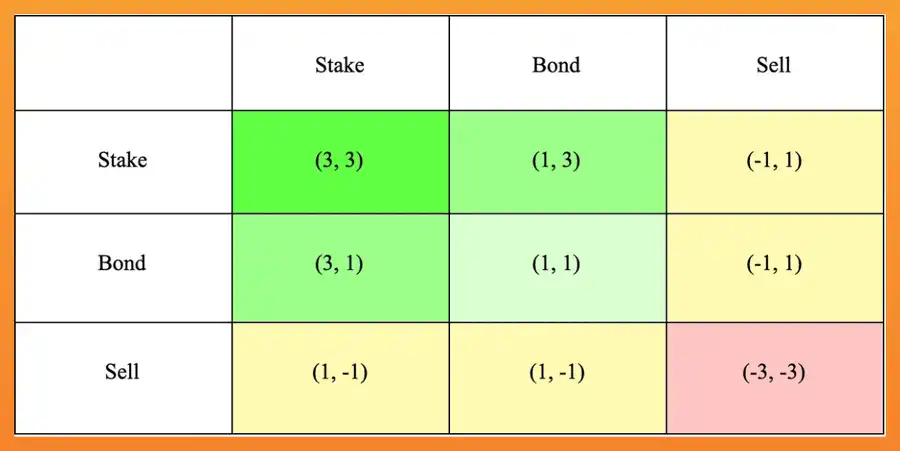
Andre Cronje introduced the ve(3,3) tokenomic model on Fantom through the Solidly Exchange. This model combines Curve Finance's voting escrow (ve) and Olympus DAO's (3,3) game theory, adjusting the incentive mechanism for token holders and liquidity providers, reducing selling pressure, and enhancing sustainability.
The goal of the ve(3,3) model is to reduce selling pressure and enhance liquidity by rewarding users who lock up tokens with transaction fees. It aims to address the unsustainable inflation issue seen in practices like liquidity mining, focusing on fee generation rather than passive issuance.
As Fantom has now been rebranded as Sonic, you can expect ve(3,3), the DeFi Flywheel, to still be a core concept of Sonic DeFi.
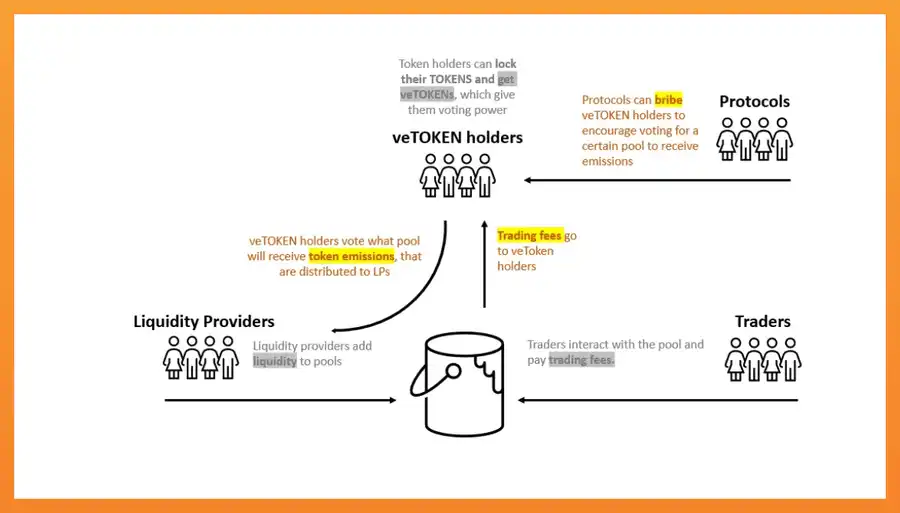
The flywheel is one of the driving forces behind DeFi's prosperity, and one of Andre Cronje's products is @yearnfi. Its token YFI surged from $6 to over $30,000 in less than two months. However, as you know, like many other meme coins, there is ultimately an end. Essentially, besides Bitcoin, the most crucial thing for any crypto project is knowing when to enter and when to exit.
What is Sonic and Why Choose Sonic
No one cares, but Sonic, formerly known as Fantom, is a high-performance Layer-1 solution with over 10,000 transactions per second and sub-second finality. Its native token $S is used for transaction fees, staking, and governance, and existing Fantom users can upgrade their $FTM tokens to $S at a 1:1 ratio.
Most people don't really care about yet another low-latency Layer 1, as we already have many similar projects in this space. So, Sonic stands out for three practical reasons:
· DeFi OG Andre Cronje coming back to lead his project.
· Airdrop strategy: Sonic is distributing 190.5 million $S (about 6% of the total supply) through a reward plan to attract new users (more information in Part Three).
· People are tired of meme coins and are returning to more fundamental DeFi plays, as seen in the price slump of $SOL.
Recent funding inflows also indicate market interest in Sonic, with:
· The native token $S rising by 113.5% in 14 days
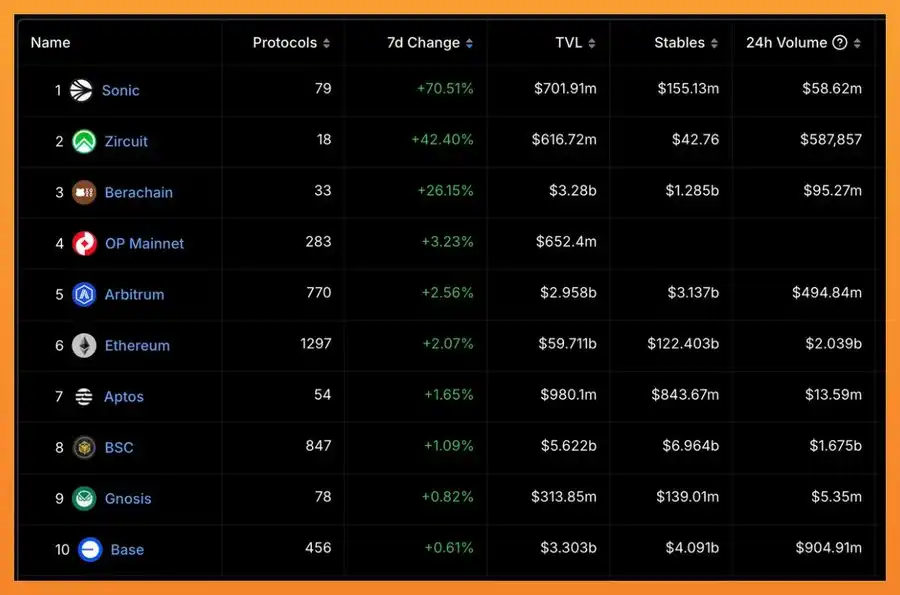
· Sonic TVL has increased by 70% in the last 7 days, outperforming all chains of reasonable scale
· FDV/Fee ratio is 283x, 57% lower than peers, indicating Sonic may be undervalued relative to its revenue generation
New Tokenomics (Dry but Important)
Supply and Inflation
Fantom's FTM has a max supply of around 31.75 billion tokens (most already fully diluted). Sonic's $S token has the same genesis supply, ensuring existing FTM can be swapped 1:1. However, $S is not a fixed-supply token; it has controlled inflation to fund growth. Approximately 6% of the total $S supply is minted for user and developer incentives (airdrops). This means about 1.905 billion $S will be airdropped around 6 months post-launch. Therefore, there will be no new supply (unlocks) until June 2025, which might present a good short-term trading opportunity.
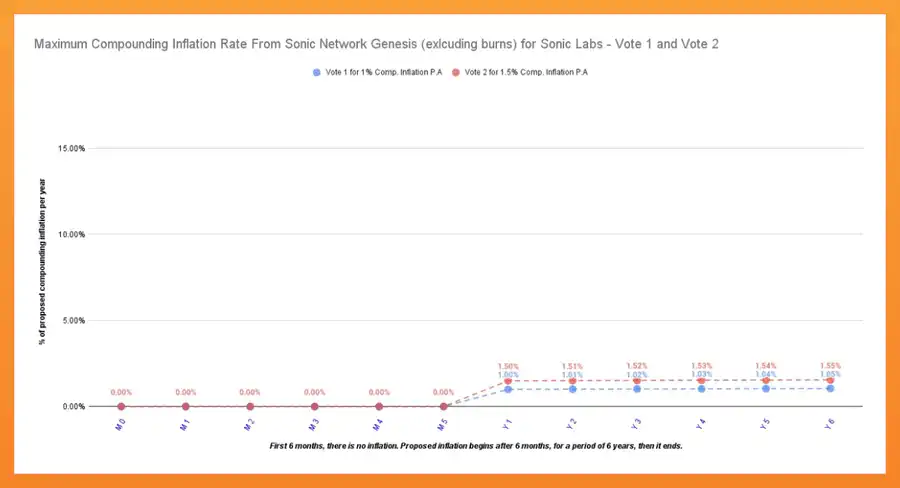
Additionally, $S will undergo 1.5% annual inflation over the first 6 years (about 47.6 million $S in the first year) to support ongoing ecosystem funding. If fully utilized, the supply could reach around 3.66 billion tokens after 6 years. In contrast, FTM's issuance is essentially complete, with no new token rewards (beyond any remaining staking rewards). Sonic's approach deliberately introduces moderate inflation for investment growth but tightly controlled—any unused fund tokens will be burnt to avoid excessive inflation.
Fee Burn and Deflation
FTM's economic model does not include significant fee burning—on Opera, gas fees are distributed to validators (15% to developers post-2022), making FTM generally inflationary (staking rewards outweigh any token burns).
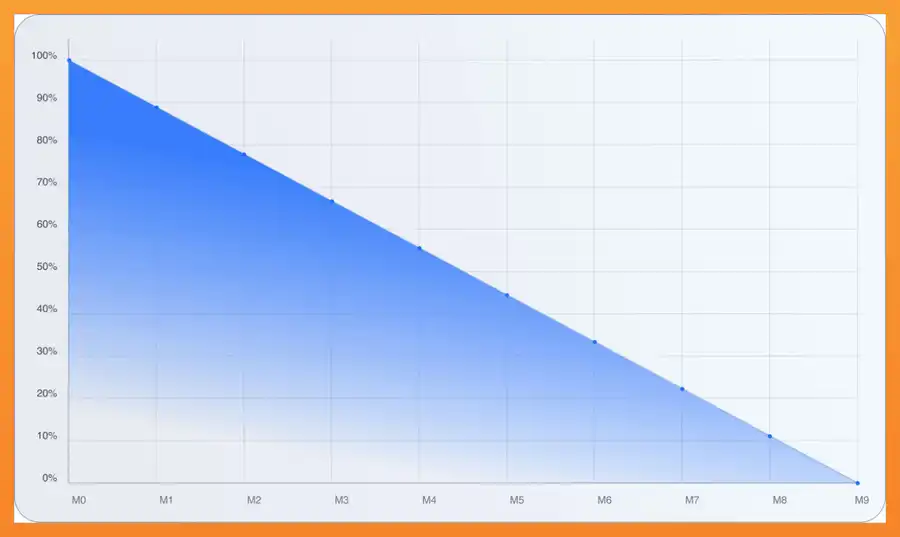
S introduces multiple deflationary pressures to offset new issuance. As mentioned earlier, 50% of all transaction fees on Sonic are default burnt (transactions not part of the gas reward scheme). If network usage is high, this could turn S into a net deflationary asset. Furthermore, the airdrop design employs a "burnt attribution" mechanism: users can immediately claim 25% of the airdrop but must wait for the remainder. If they opt for quicker attribution, they will forfeit a portion as a penalty for short-term selling.
Finally, any unused 1.5% of the ecosystem fund will be burned. Overall, these burn and controlled release mechanisms may offset most of the 6-year inflation, helping $S gradually move towards deflation after the initial growth phase.
User Incentive Plan
As mentioned earlier, Sonic is distributing 190.5 million $S tokens to reward users. You can earn the airdrop in the following ways:
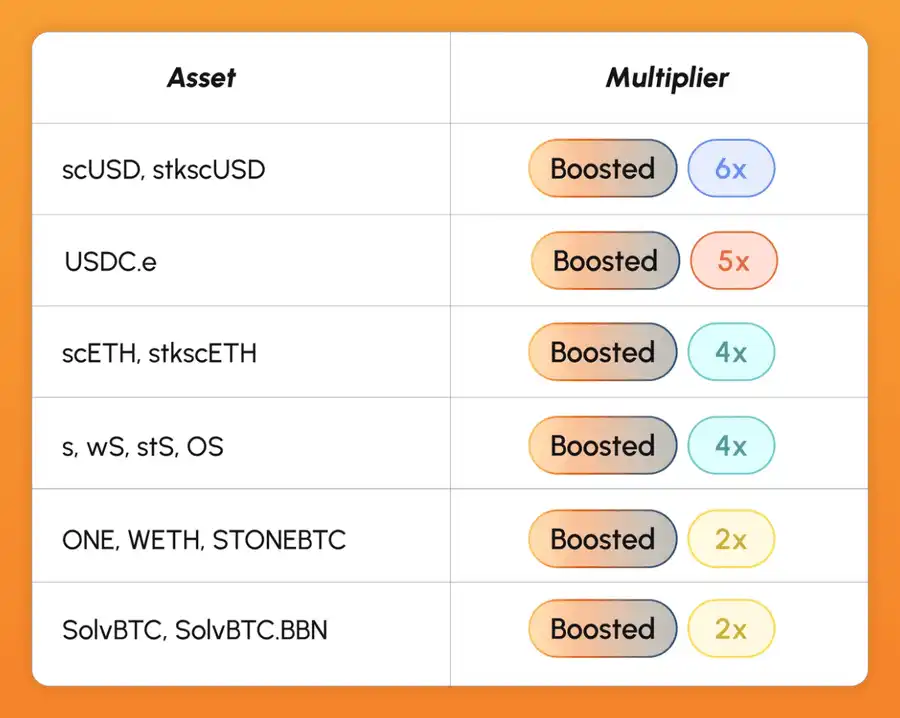
· Hold assets on the whitelist, ensuring it is not in a CEX wallet
· Engage with Sonic's DeFi protocol, including staking $S, providing liquidity on DEX, yield farming, etc. DeFi activity is weighted 2x compared to just holding assets.
Opportunities in the Ecosystem
You can receive $S airdrops by holding assets or participating in Sonic's ecosystem. Sonic is a new ecosystem, so many new projects may carry higher founder risk but could also present alpha opportunities for a 10-100x return. Here are some potential projects I've handpicked from four areas (DEX / Lending / Derivative / Meme). (All of these are non-sponsored, just my personal picks)
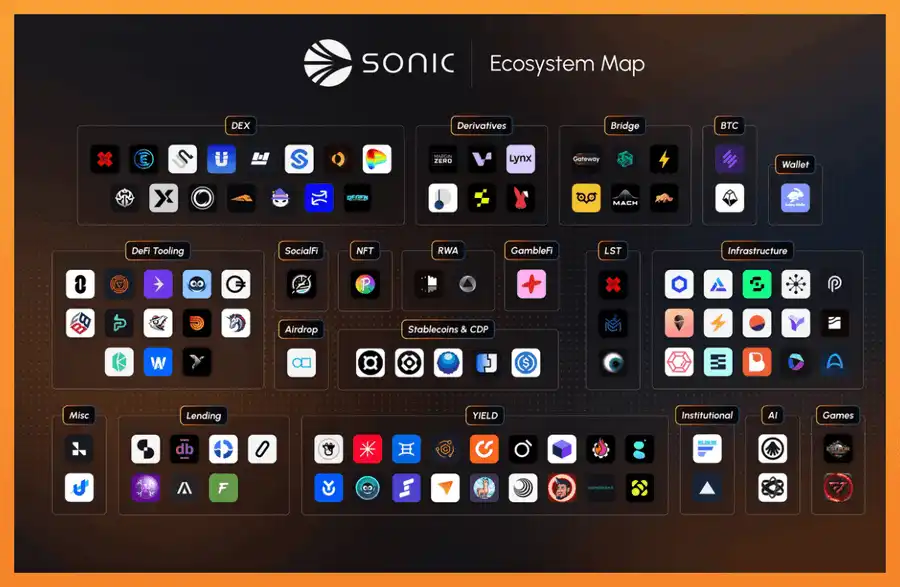
The image seems to have a lot going on, but most are not "opportunities." They are either not native to Sonic or have been live for some time. Here are the actual opportunities.
DEX
@ShadowOnSonic
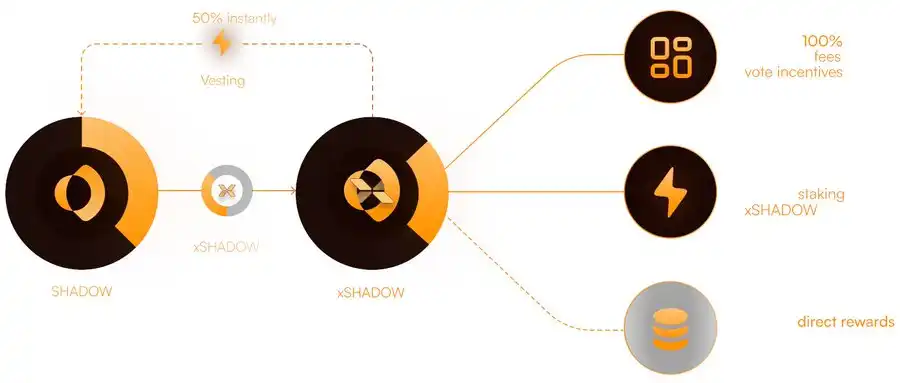
A leading native DEX on Sonic, with a TVL exceeding 150 million and weekly incentives of 13.73 million USD. Its x(3,3) token model provides users with flexibility, allowing for instant withdrawal or vesting over a selected time, unlike the long-term lockup in ve(3,3). It also features a PVP rebase mechanism, implementing a 50% voting power penalty on early exits to protect against dilution and incentivize long-term holding.
@MetropolisDEX
An AMM-based DEX on Sonic, featuring a Dynamic Liquidity Market Maker (DLMM) protocol that combines AMM and order book features. Players from Solana and farmers from Meteora will love this.
@vertex_protocol
A DEX offering spot, perpetual, and money market trading with cross-margin functionality. It boasts low fees (0% maker, 0.02% taker), fast order execution, and cross-chain liquidity. It is backed by a true DeFi OG team.
@wagmicom
One of the native DEXs on Sonic with high trading volume. It processed over $1.2 billion in less than two months. Users have earned over $3.6 million in fees through LP strategies, leveraging Sonic's speed and scalability to enhance yield. It may emerge as a strong competitor to Shadow.
Lending
@SiloFinance
Offers permissionless and risk-isolated markets. It supports rapid deployment of new trading markets with no integration required, hitting a peak daily trading volume of $125 million.
@eggsonsonic
Provides collateralized lending executed via smart contracts, featuring functionalities such as trading fees and liquidation events.
@eulerfinance
A modular lending protocol supporting permissionless lending, similar to Ethereum's Morpho.
@VicunaFinance
Offers leveraged yield farming and provides uncollateralized loans.
Derivatives
@Rings_Protocol
An elemental asset protocol catering to yield-bearing stablecoins. It provides deep liquidity to Sonic DeFi and funds projects through fund locking.
@spectra_finance
An interest rate derivative protocol that allows for yield trading and fixed rate. It provides liquidity providers with hedging against yield volatility and earns them additional interest.
@vfat_io
A yield aggregator that simplifies yield farming and rebalancing.
@GammaSwapLabs
A volatility trading platform that does not require an oracle. It offers zero-fee token trading and liquidity through AMM.
@NaviExSonic
A derivatives trading platform that provides perpetual contracts.
Meme
@derpedewdz
The primary NFT in the Sonic ecosystem.
@LazyBearSonic
A native NFT issuance platform for Sonic.
@TinHat_Cat
Sonic meme with a strong community.
You may also like

Japan’s Three Megabanks Plan Joint Stablecoin Issuance in Fiscal 2026
MUFG, SMBC, and Mizuho reportedly plan to jointly issue fiat-pegged stablecoins in fiscal 2026, signaling Japan’s growing push into bank-led digital payment infrastructure.

Humanity Discloses H Token Dual-Chain Attack Details, With Losses on Ethereum and BSC Exceeding $36 Million
Humanity said the H token attack across Ethereum and BSC caused more than $36 million in losses after leaked ProxyAdmin keys enabled malicious contract upgrades and token minting.

White House Discusses CLARITY Act With Law Enforcement Ahead of Senate Vote
The White House discussed the CLARITY Act with law enforcement ahead of a Senate vote, focusing on illicit finance risks and developer protections.

$75 billion in foreign capital has fled, and South Korean retail investors have absorbed it all using leverage

Bitcoin Trading Guide 2026: Strategies for Experienced Traders

What Is XAUT and PAXG? Why Tokenized Gold Is Booming in 2026

Cryptocurrency CEXs are flocking to sell US stocks, and traditional brokerages are facing an "uninvited guest."

Will the SpaceX IPO Hurt Bitcoin? Here's What Traders Are Watching
Foreign selling in the South Korean stock market accelerates, with cumulative net sales reportedly reaching $75 billion this year
On June 9, The Kobeissi Letter, citing Goldman Sachs data, reported that global investors are selling South Korean stocks at an unusually rapid pace. In the latest trading session, foreign investors sold about $801 million worth of Kospi constituent stocks again; total foreign outflows last week reached about $10 billion, and the market has been in net foreign selling on nearly every trading day over the past month. According to the data cited in the report, foreign investors have sold about $75 billion worth of South Korean stocks so far this year. Meanwhile, South Korean retail and institutional investors together recorded roughly $69 billion in net buying over the same period, suggesting that the market’s main buying support has come from domestic capital rather than returning overseas funds. The information currently disclosed still mainly comes from The Kobeissi Letter’s retelling and Goldman Sachs data summaries, while public details on the statistical period and the specific definition of “selling” remain relatively limited.

Fortune Warns of Strategy’s Financing Structure Risks as Bitcoin Premium Narrows
Fortune warned that Strategy’s Bitcoin treasury model faces growing financing risks as MSTR’s net asset premium narrows and preferred stock dividend pressure increases.

Ferrari Challenge Le Mans: Carl Moon to Dominate in WEEX Livery

Sahara AI Responds to SAHARA’s Sharp Drop: No Contract or Product Security Issues Found, Internal Investigation Underway
Sahara AI responded to SAHARA’s 60% price drop, saying no token contract or product security issues have been found and an internal investigation is underway.

WEEX Deposit/Withdrawal Dynamic Island: Your Asset Status, Always in Sight
Scaling Crypto Derivatives: The Digital Asset Infrastructure Behind High-Volume Trading
In the fast-moving digital asset ecosystem, derivatives platforms face an extreme architectural test. High-leverage futures markets demand more than just standard security—they require absolute operational precision, zero-latency matching engines, and ironclad structural scalability, all while navigating intense market volatility.
As global platforms scale to meet these demands, the industry is shifting away from rigid, monolithic setups toward a more agile, "decoupled" infrastructure philosophy.
The Blueprint for High-Volume Copy TradingFor elite global exchanges like WEEX (founded in 2018), this architectural choice becomes critical when scaling high-volume retail features like social copy trading. When thousands of users automatically mirror the real-time strategies of elite traders simultaneously, it triggers sudden, monumental spikes in concurrent transactional volume.
To prevent execution latency or settlement bottlenecks during these peak volatility events, a platform's primary engine must remain entirely dedicated to risk management, copy-trade synchronization, and order matching.
The Architectural Rule: New-generation platforms must separate front-end user execution engines from heavy backend infrastructural overhead to eliminate operational friction.
By separating these layers, platforms can maintain complete sovereignty over their trading environments and user experiences while strategically aligning with institutional-grade infrastructure ecosystems. This strategic framework allows modern exchanges to leverage advanced Digital Asset Custody infrastructure such as Cobo’s behind the scenes, ensuring that backend wallet management scales elastically alongside trading spikes.
Capitalizing on Market Momentum and 400× LeverageIn a derivatives arena where platforms offer up to 400× leverage on perpetual contracts, capital efficiency and market agility are core business metrics. To capture market momentum, an exchange needs the ability to rapidly expand its asset offerings, supporting everything from legacy crypto assets to sudden, trending altcoins across a massive library of trading pairs.
Adopting a flexible, scalable Wallet-as-a-Service (WaaS) solution such as Cobo’s could completely rewrite the development timeline for high-growth exchanges. Instead of spending months of engineering capital building out custom backend wallet architectures for every new blockchain network, platforms can deploy localized infrastructure in days.
This agility allows platforms to instantly scale their listings to over a thousand trading pairs without compromising security or delaying time-to-market. It mirrors the exact operational advantages seen during high-velocity market events, similar to how advanced wallet infrastructure empowers platforms during sudden asset surges; allowing exchanges to pass that speed and liquidity directly to their global user base.
A Mature Foundation for GrowthThe synergy between trusted infrastructure ecosystems and global trading platforms represents the natural evolution of a maturing crypto market. As WEEX continues to scale its global spot and derivatives offerings for over 6 million users, adopting robust backend paradigms proves that platforms no longer have to compromise between cutting-edge trading velocity and uncompromised structural security.

Morning Report | BitMine increased its holdings by 126,971 ETH last week; trader Eugene announced his exit from the crypto market

Wang Chuan: How can one not feel anxious after the neighbor Old Wang made thirty times profit by investing in storage stocks? (Seven) - A quarter-century cycle

Get Paid to Onboard? Try WEEX’s New Homepage with Rewards for Registration, Deposit & Trade
WEEX Custom Layout: Build Your Perfect Trading Workspace in Seconds
Japan’s Three Megabanks Plan Joint Stablecoin Issuance in Fiscal 2026
MUFG, SMBC, and Mizuho reportedly plan to jointly issue fiat-pegged stablecoins in fiscal 2026, signaling Japan’s growing push into bank-led digital payment infrastructure.
Humanity Discloses H Token Dual-Chain Attack Details, With Losses on Ethereum and BSC Exceeding $36 Million
Humanity said the H token attack across Ethereum and BSC caused more than $36 million in losses after leaked ProxyAdmin keys enabled malicious contract upgrades and token minting.
White House Discusses CLARITY Act With Law Enforcement Ahead of Senate Vote
The White House discussed the CLARITY Act with law enforcement ahead of a Senate vote, focusing on illicit finance risks and developer protections.
$75 billion in foreign capital has fled, and South Korean retail investors have absorbed it all using leverage
Bitcoin Trading Guide 2026: Strategies for Experienced Traders
What Is XAUT and PAXG? Why Tokenized Gold Is Booming in 2026


